Dr. Martens Snow Boots range from grip-focused leather styles to insulated lace-ups and waterproof PVC rain boots. I would choose between warmth and water protection by checking the forecast before I get dressed.
Dr. Martens Snow Boots: Warm Linings, Grippy Treads and the Wet-Weather Split
Grip first, warmth next
On 1 April 1960, Northamptonshire shoemaker Bill Griggs produced the 1460, adapting the air-cushioned sole developed by German doctors. I like that a boot born from a practical problem still has a place on a winter commute. Dr. Martens Snow Boots are less one answer than a small weather wardrobe.
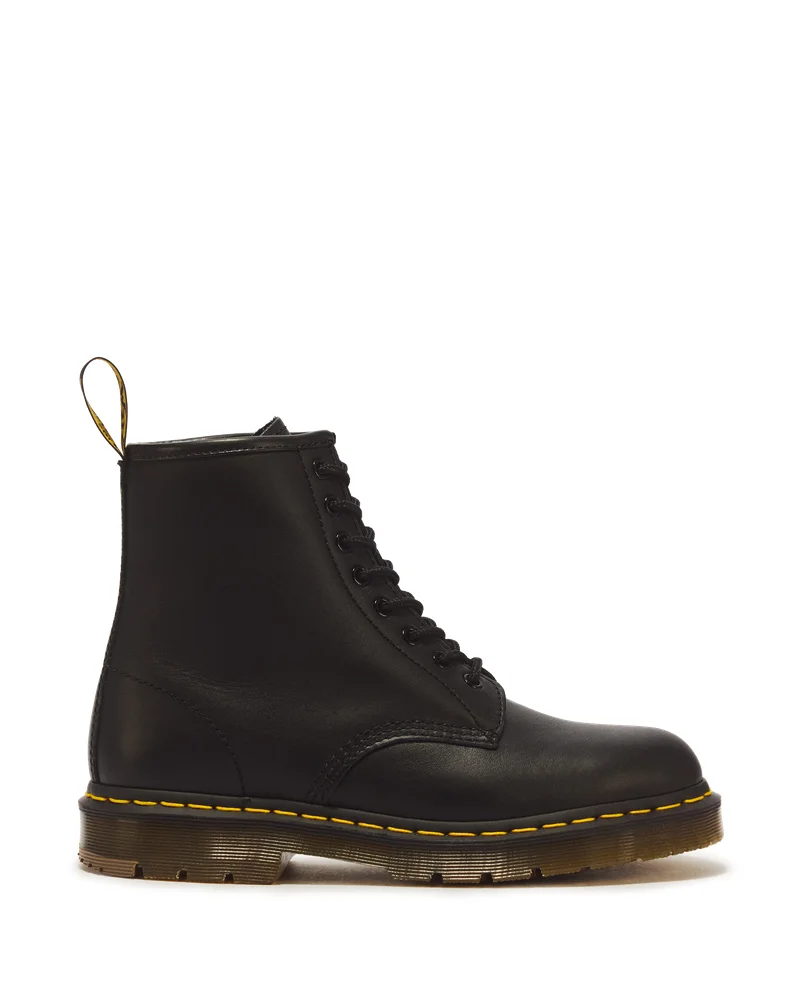
The 1460’s character came from useful details: an eight-eye upper, yellow stitching and the grooved sole edge Griggs added when his company acquired UK manufacturing rights in 1959. Its name points back to its 1 April 1960 inception. Construction matters more than the familiar silhouette; winter is no time to mistake a recognizable shape for weather protection.
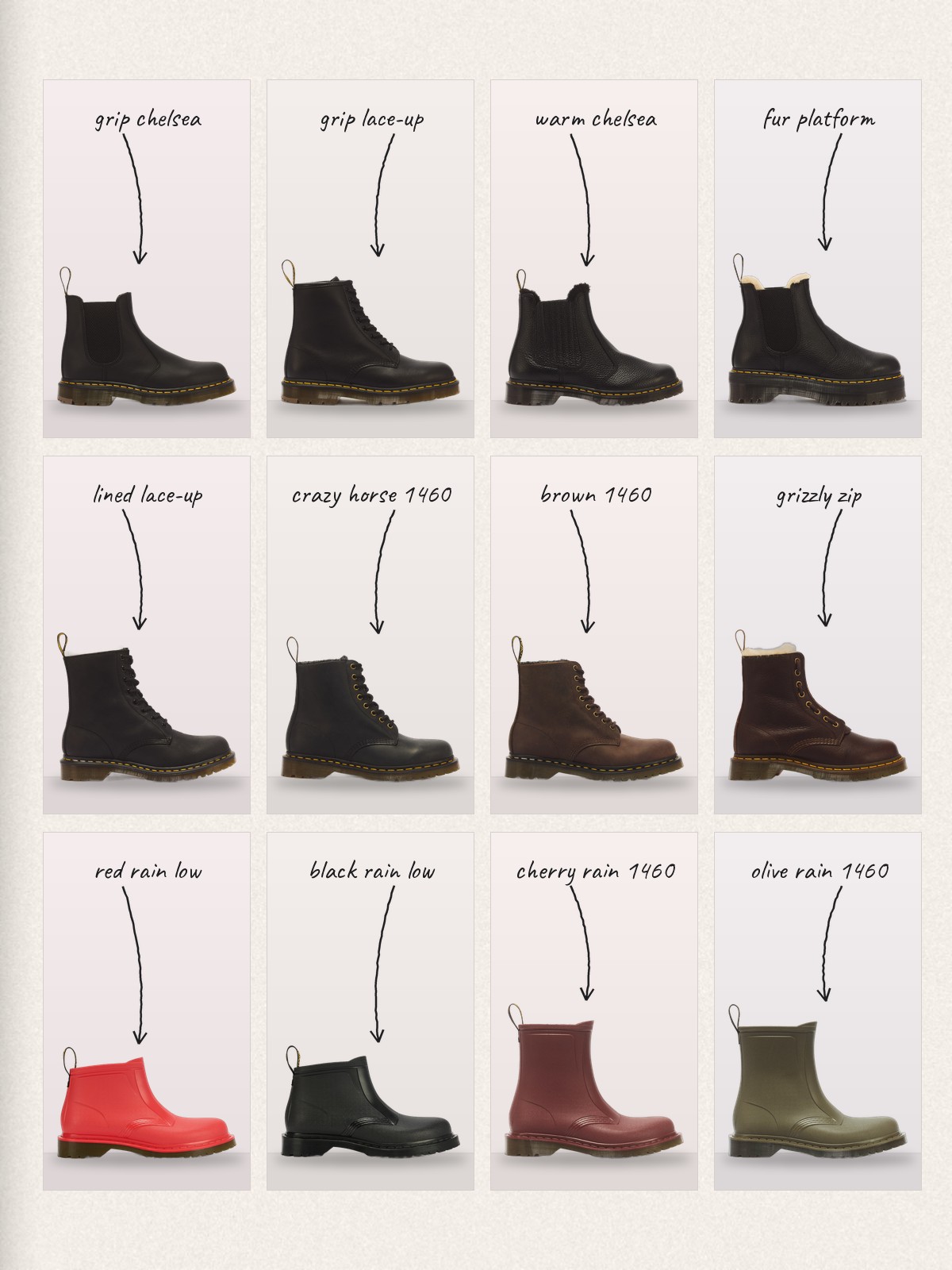
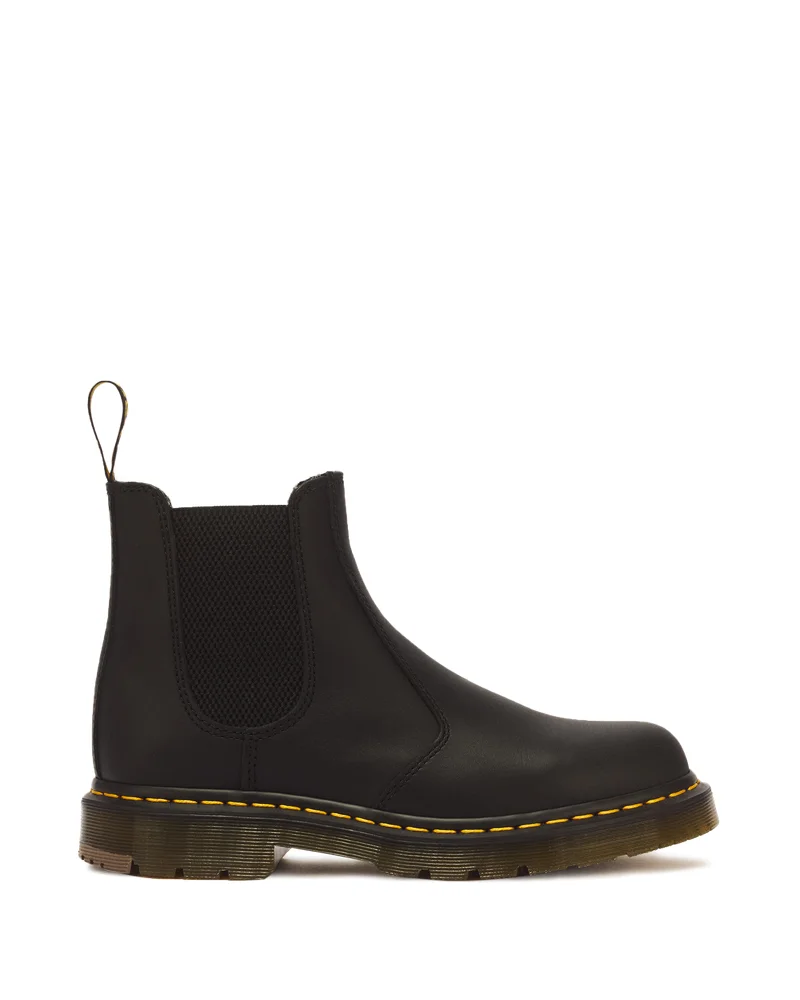
The black Slip Resistant Leather Chelsea Boots have elastic gussets, a cushioned SoftWair footbed and Grip-Trax tread; the brand says the splash-resistant leather and tread help with traction on slippery surfaces. The Slip Resistant Leather Lace Up Boots offer the same grip with a more wrapped-in look; wear either with straight jeans and a wool coat. Traction on slippery ground is not a promise for deep snow or prolonged wet.
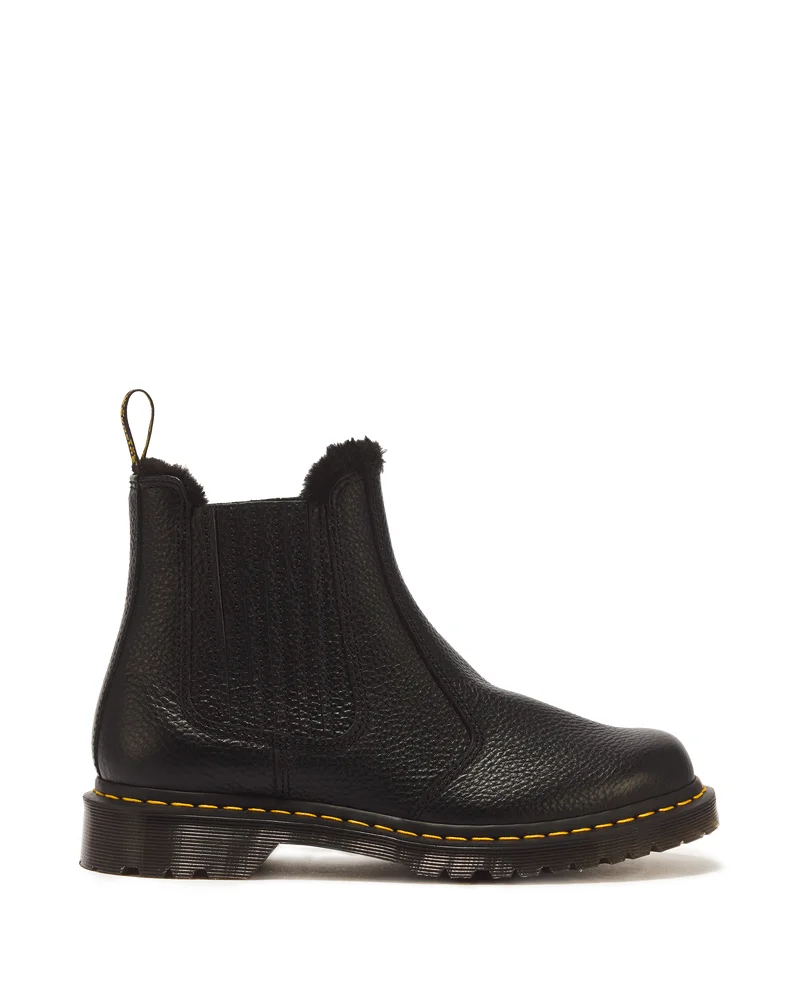
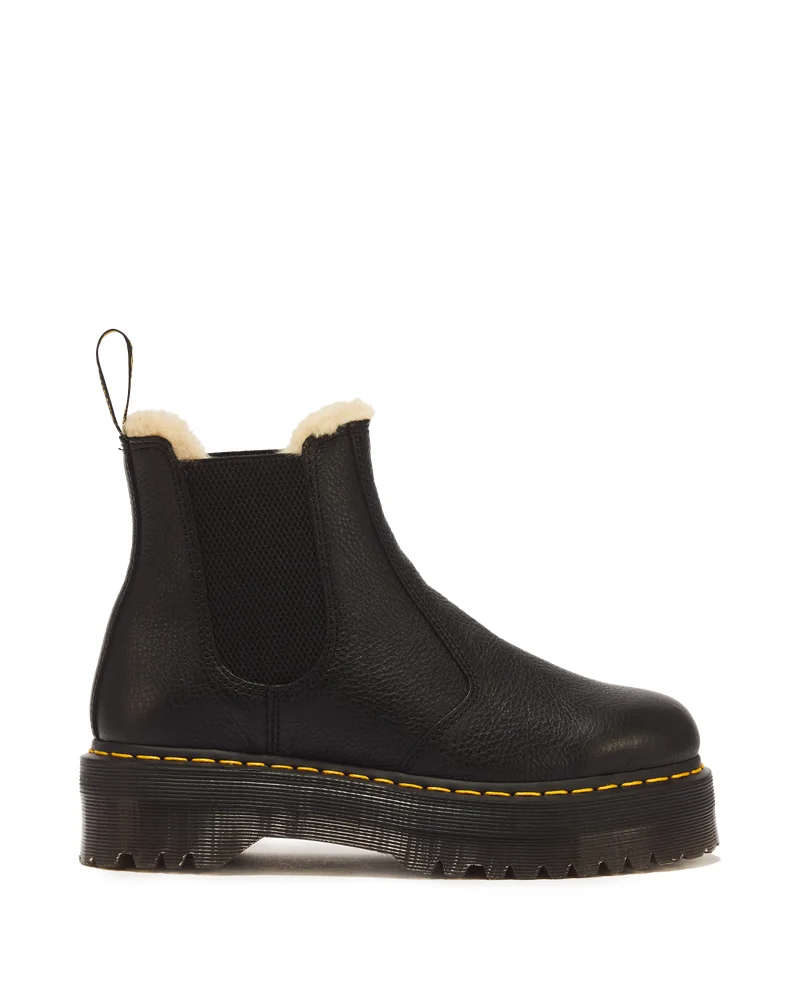
For cold rather than rain, the Leonore II Faux Fur Lined Soft Leather Chelsea Boots bring pebbled Milled Nappa, gussets and a WarmWair lining; the Faux Fur Lined Platform Chelsea Boots have a faux-fur interior and a 1.5-inch lift. Pair the platform style with a long skirt, then check the room left for the socks you plan to wear. A quick forecast check clarifies the choice: warmth, grip and waterproofing are different jobs.
Warm-lined lace-ups for cold walks
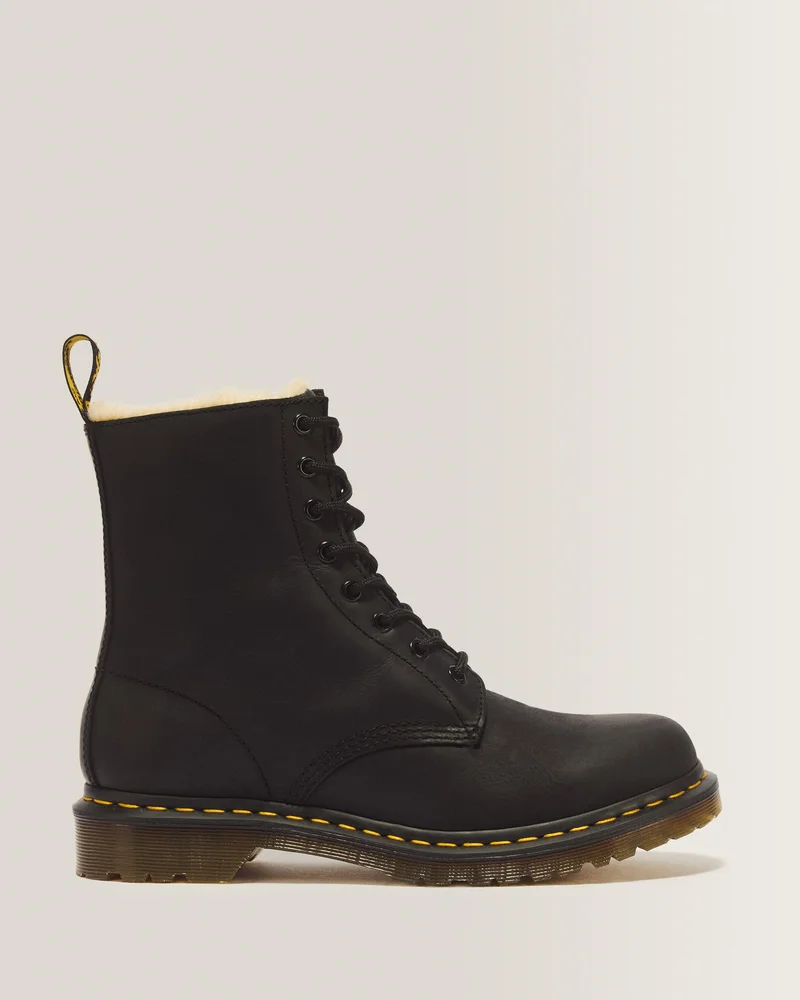
Warmth and waterproofing are separate matters. The brand describes WarmWair as insulating fleece or faux fur, so choosing Dr. Martens Snow Boots depends on where you will be standing as much as how cold it is. Lined lace-ups make sense on a dry, cold day, with a wool coat and straight-leg jeans skimming the collar.
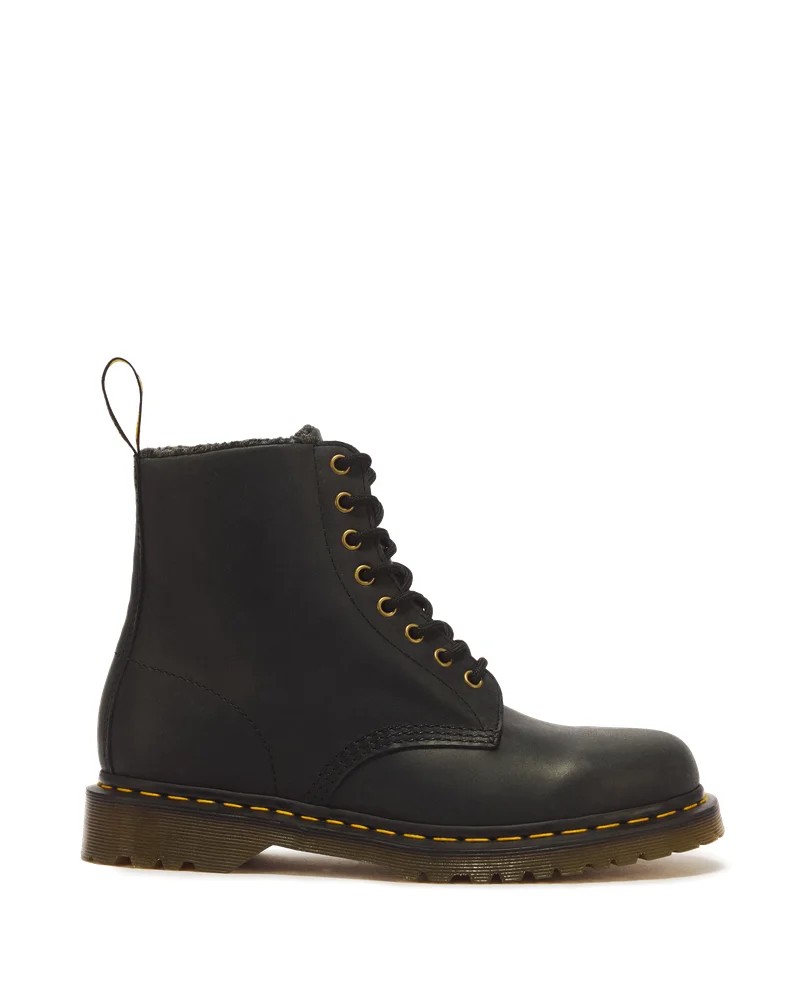
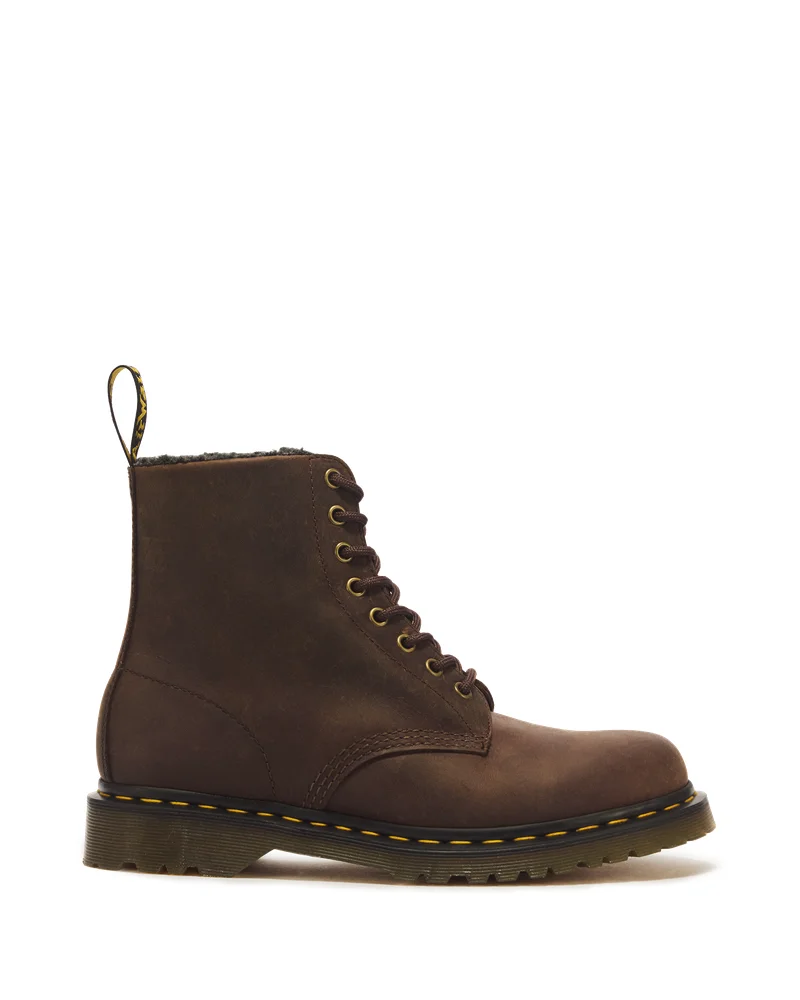
The Faux Fur Lined Lace Up Boots keep the eight-eye outline with a soft artificial-fur interior. The black 1460 Pascal WL 8 Eye Crazy Horse Leather Boots keep antique-gold eyelets, yellow thread and rugged tread; the dark-brown version changes the palette, not the model. Pair black with charcoal trousers and brown with olive or camel, letting the eyelets do their small jewelry work.
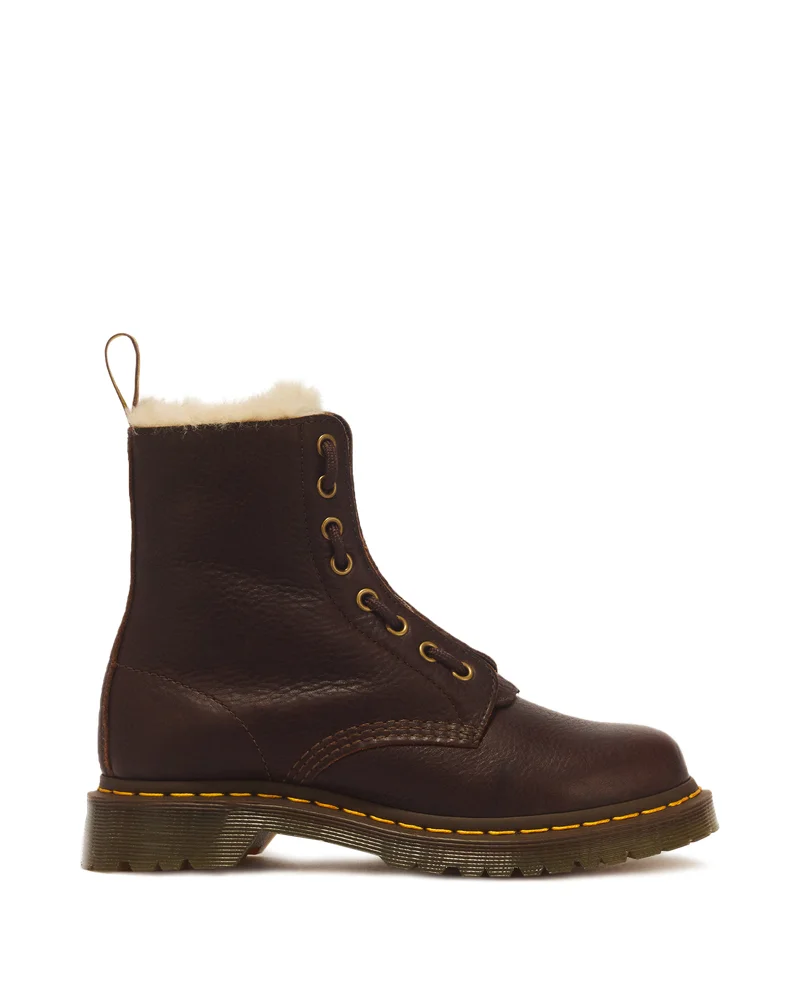
The dark-brown 1460 Serena Zip 8 Eye Grizzly Leather Boots have textured leather, antique-silver hardware and a removable front zip. Compare the zip with the lace-up closure, then check the size notes against the socks you expect to wear. A warm lining does not seal out rain: it is an insulation detail, not a waterproof claim, so let the forecast decide.
Waterproof PVC for rain and slush
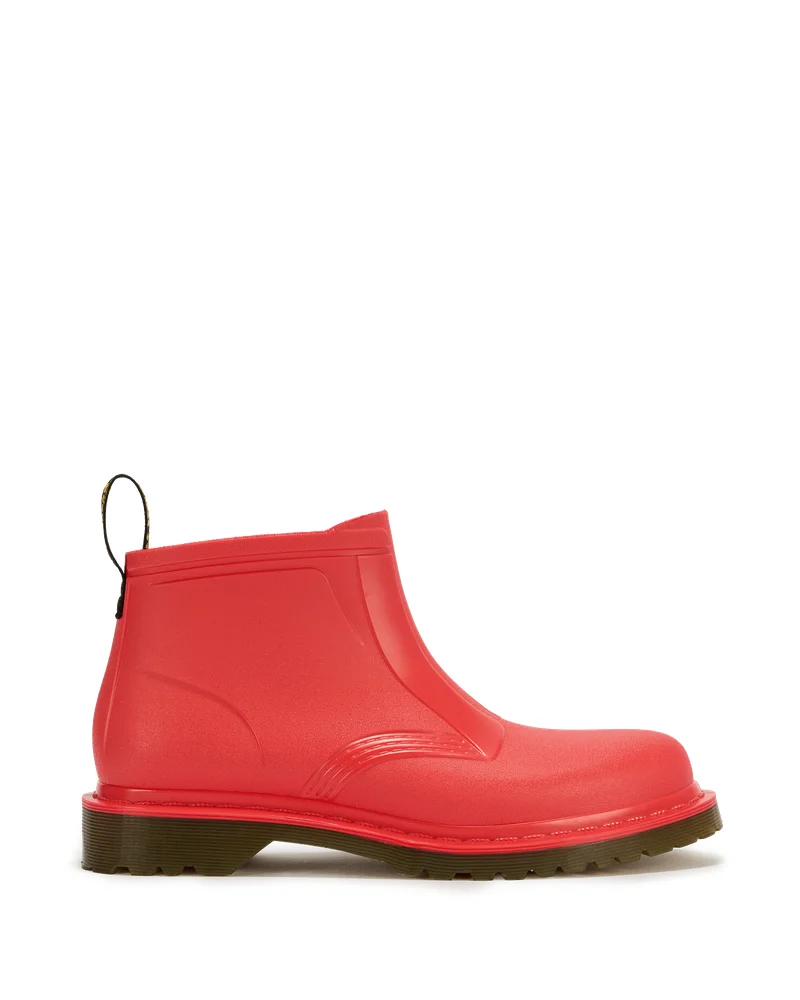
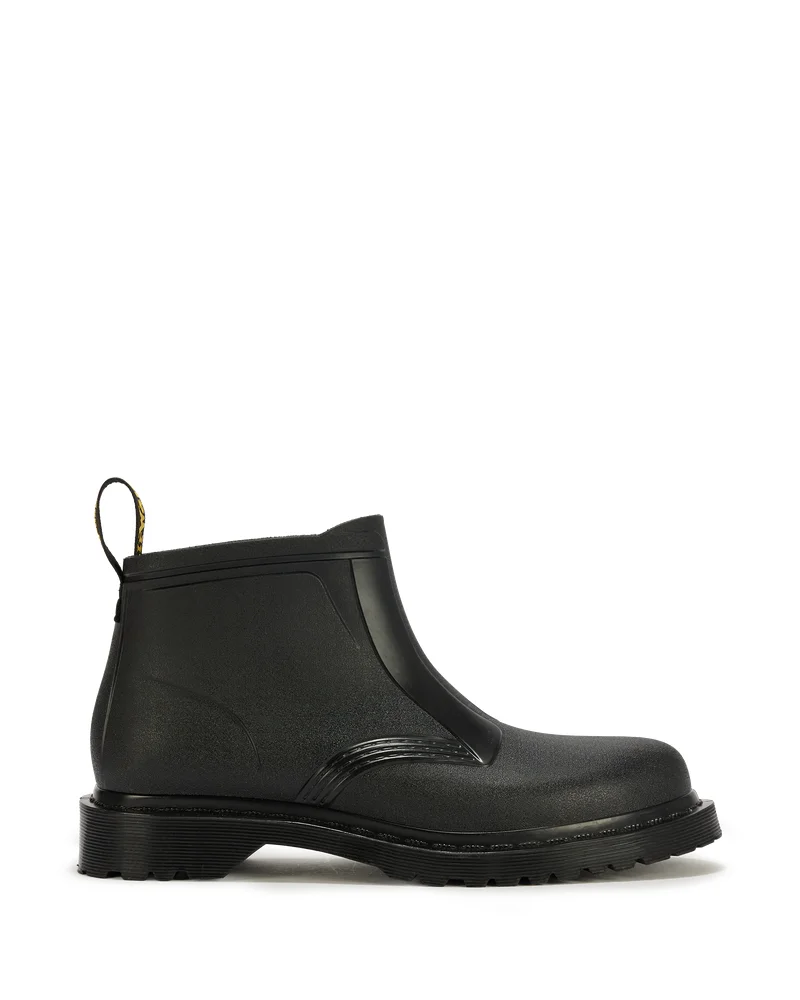
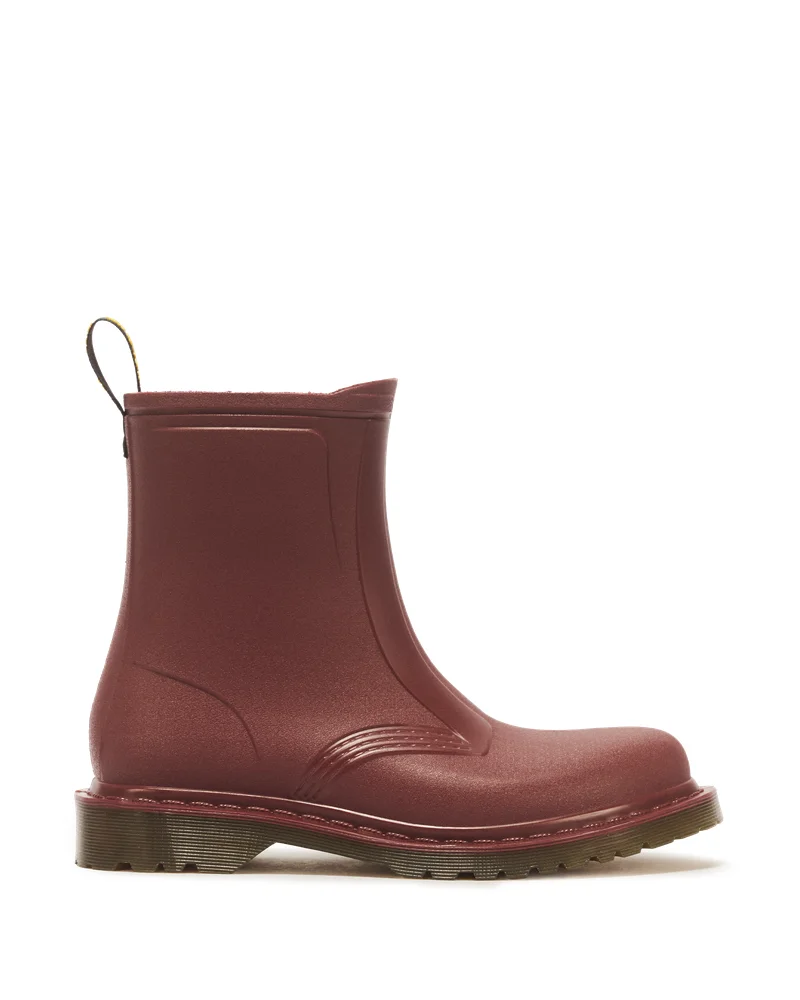
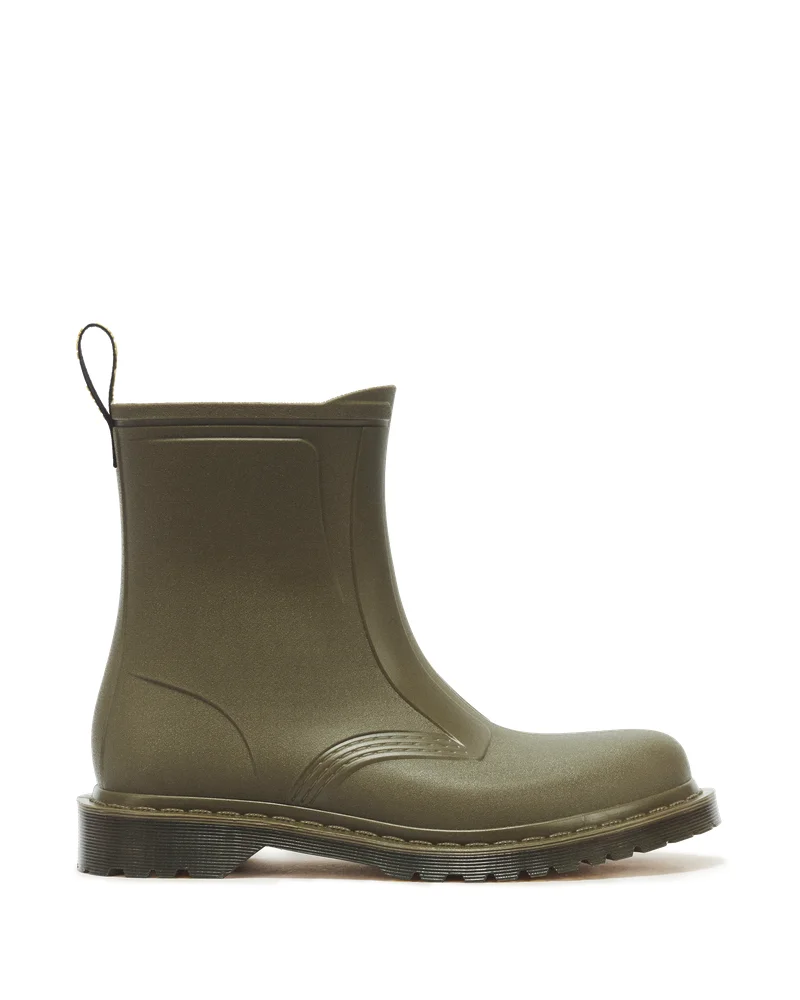
The rain-specific answer is straightforward: the 101 Rain Low Pull On and 1460 Rain Pull On are waterproof PVC styles, with faux-stitch details and rubberized heel tabs. They make sense for wet sidewalks; the brand still recommends specialist footwear for deep snow or an expedition.
The forecast gets the last word
Ordinary snow and slush fall within the brand’s stated range; deep snow or an expedition calls for specialist footwear. The distinction matters once a walk moves beyond slick pavement. After a wet walk, brush away salt and grit, then let the boots dry naturally. Choose the pair whose construction matches the weather, rather than expecting one boot to do every job.