New Balance 574 sizing is mostly true to size, but the 574 Core runs small; compare your foot length and width with the chart before ordering.

New Balance 574 Sizing: Do 574s Run Big or Small?
How 574 sizing behaves
New Balance 574 sizing is usually close to true to size, but the 574 Core is the caveat: New Balance says it runs small, so consider half a size up if you are between sizes or want more toe room. So, do New Balance 574s run big or small? Not usually big. Zappos fit surveys lean true to size for the Core and women's WL574V2, even though the Core product page advises sizing up. I would not move up automatically without trying the exact version.
New Balance's women's chart runs from US 3 to 16 and includes half sizes, with matching men's US, UK, EU and foot-length columns. For a reference point, women's 8.5 equals men's 7, UK 6.5 and EU 40, with a listed 25.5 cm length. The width guide uses 2A narrow, B standard, D wide and 2E extra-wide. If your toes feel crowded but the length is right, I would test width before adding length.
New Balance traces its start to a 1906 arch-support business. The brand describes the 574 as a reliable hybrid road-and-trail shoe built on a wider last than its narrow racing silhouettes. I like that history because fit is not an afterthought here; it is part of how the company began.
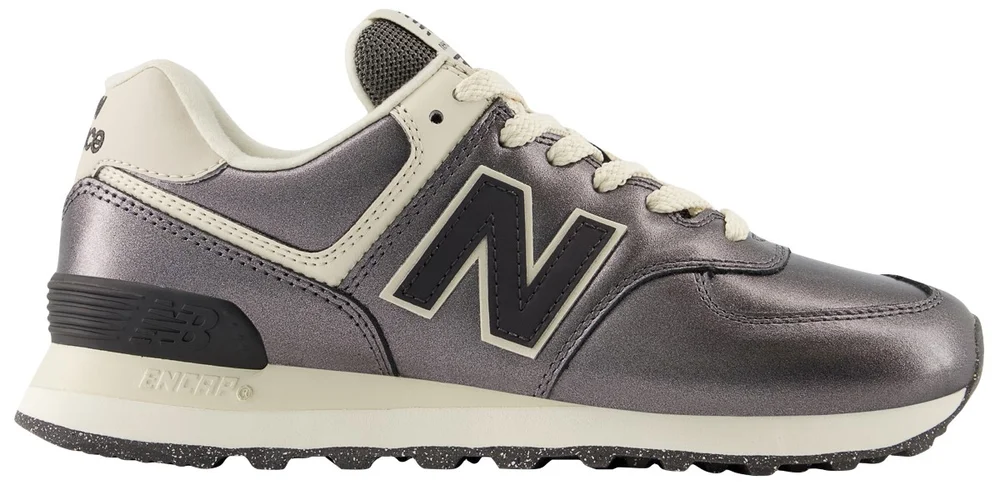
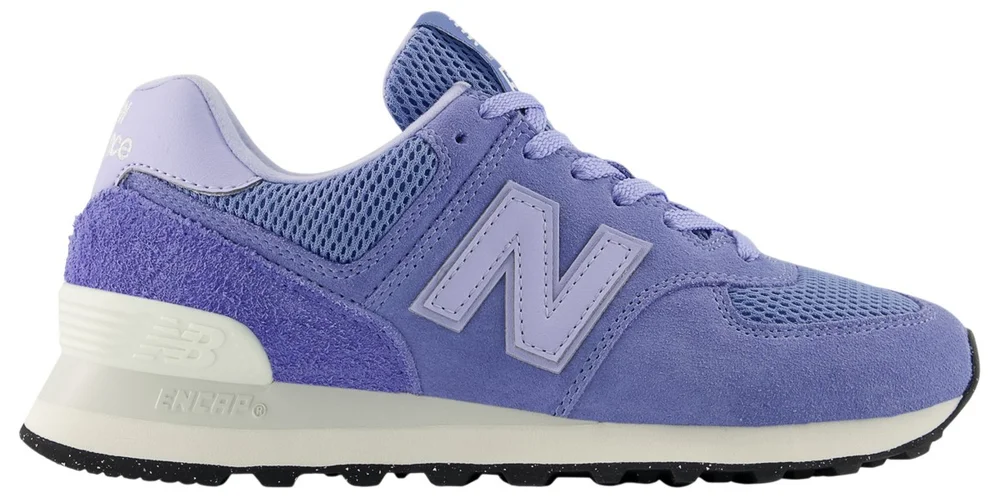
Women's size labels
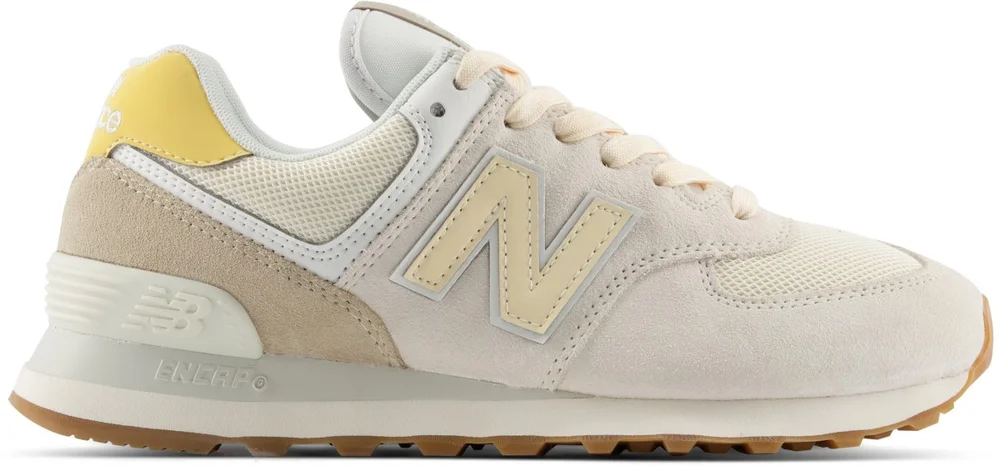
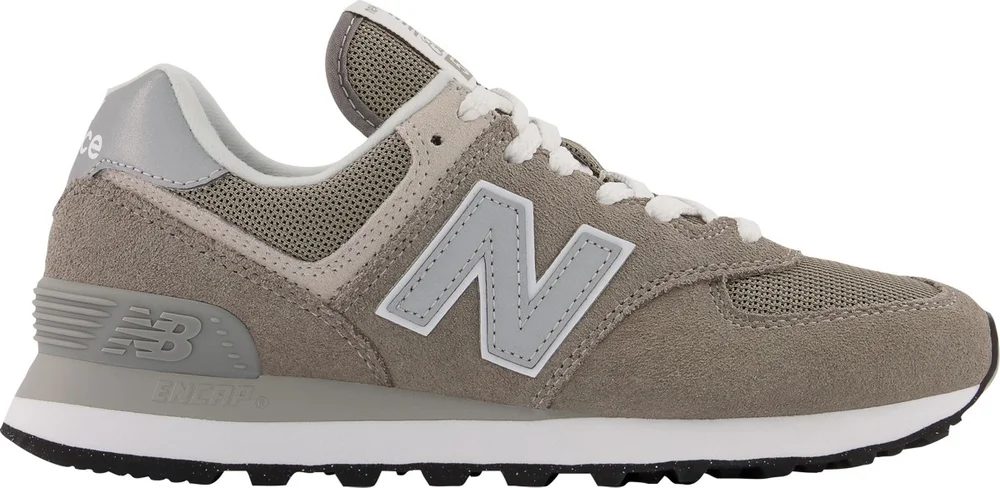
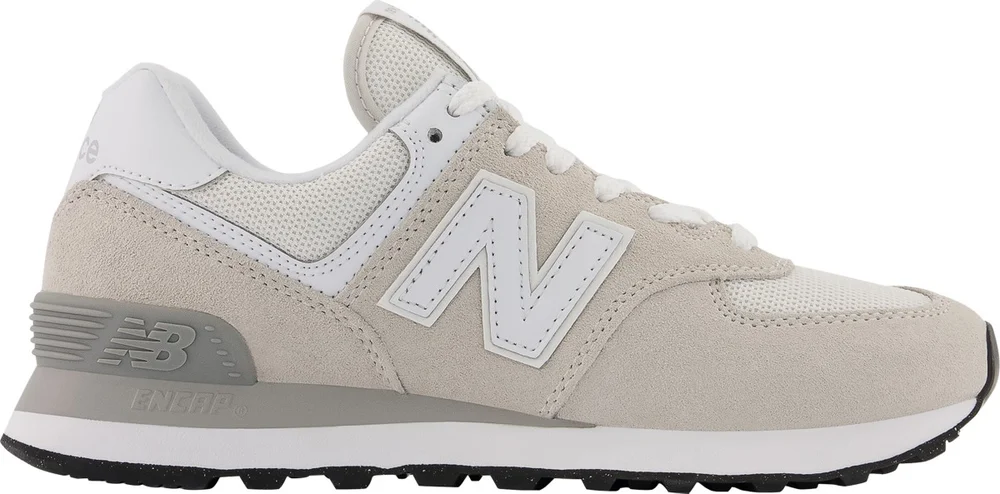
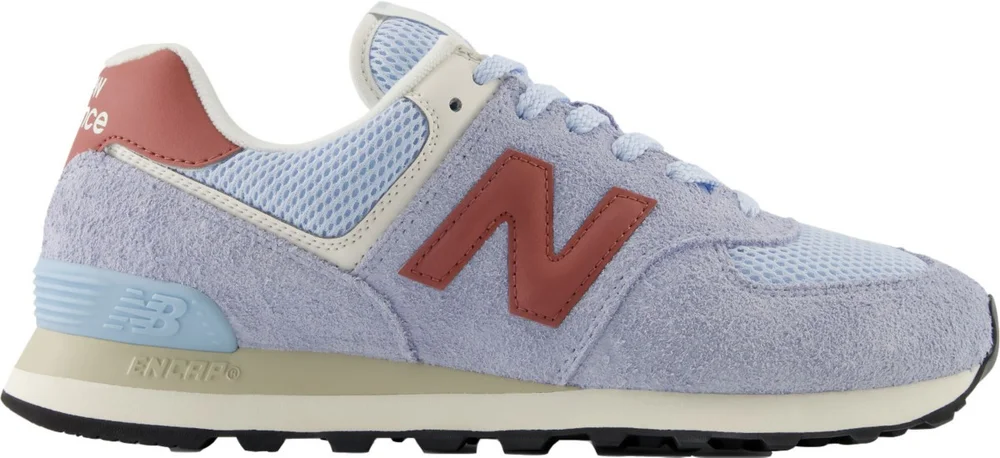
Sea Salt/Linen and Grey/Grey/Grey keep the women's sizing label straightforward; the first is pale, the second a quieter grey. Bronze/Black brings the darkest contrast, while Blue Indigo/White adds a clear blue note. These are all women's 574 choices, so I would begin with the women's size you usually wear in casual sneakers rather than applying a men's conversion.
As for whether New Balance 574s are true to size, Zappos' WL574V2 survey leans true to size and true to width, but individual feet do not read like averages. I would compare toe room and the width letter in your usual size first. If the forefoot is tight but your heel-to-toe length feels right, try a wider width before moving up; if your toes touch the front, then test the next half size.
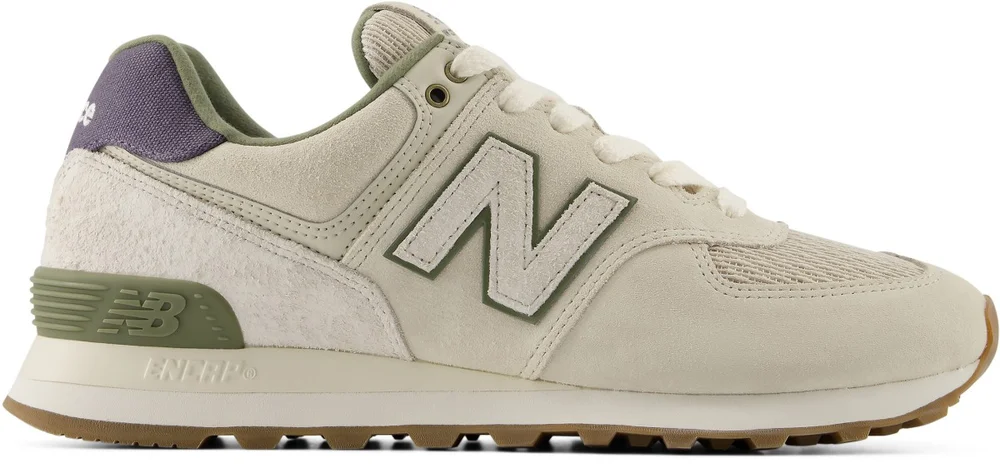
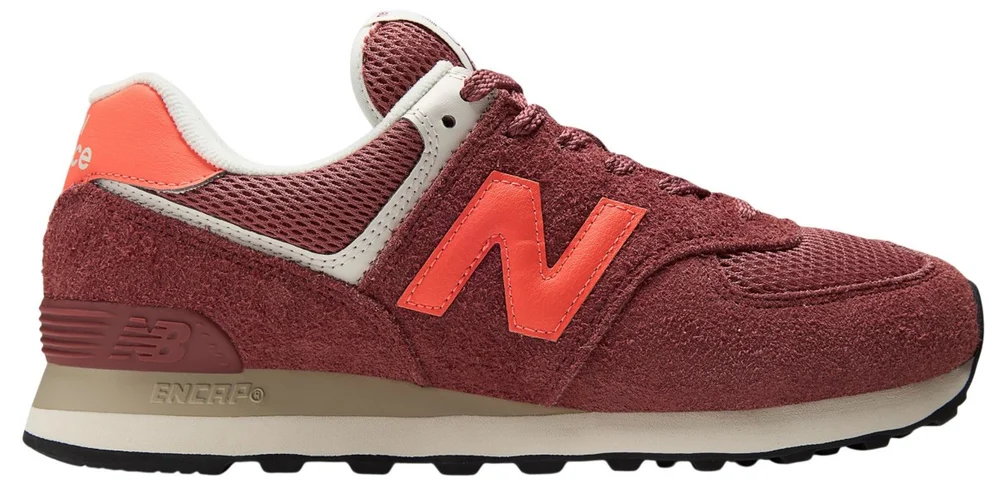
Reading unisex size pairs
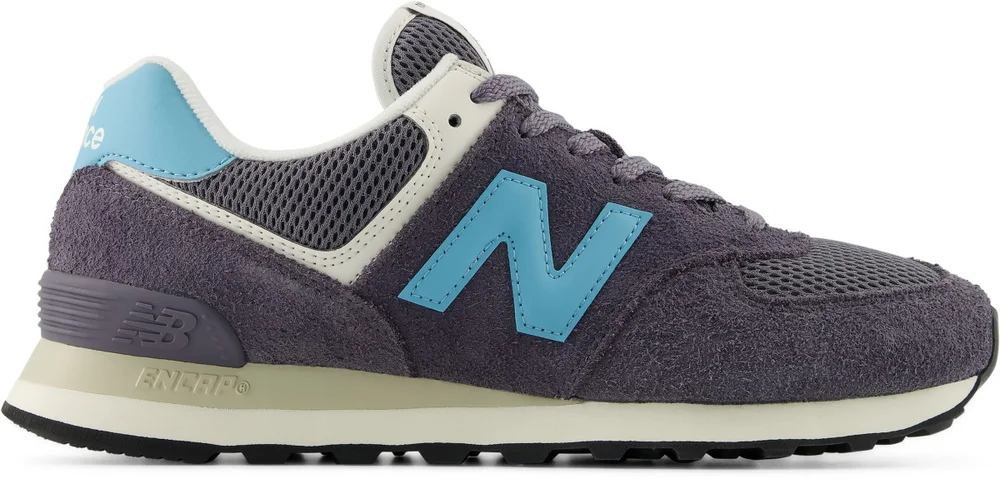
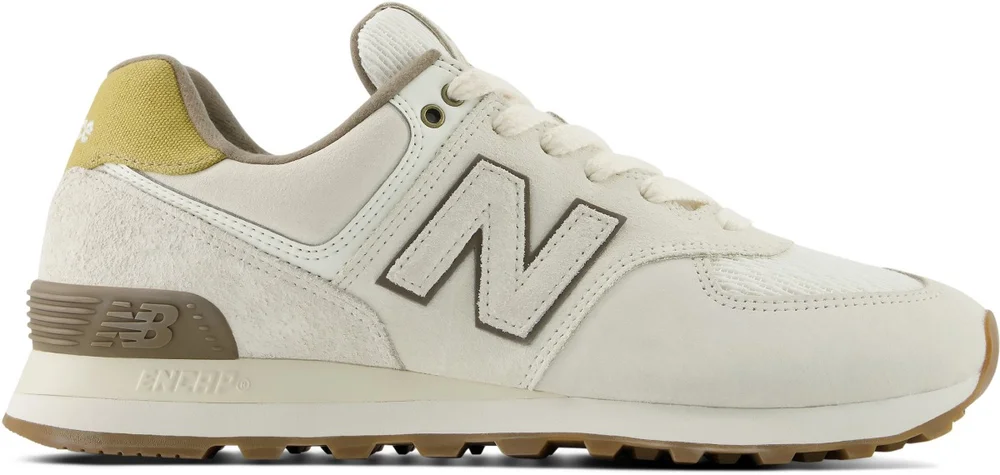
Off White/Navy is marked M4.5/W6.0, Off White/Grey M8.0/W9.5, Neptune Grey/Taffy Blue M9.5/W11.0, and Apollo Gold/Atomic Yellow M8.5/W10.0. DICK'S shows men's and women's equivalents together on these unisex options, so I would choose the women's number that matches my usual size rather than treating the men's label as the only size.
That conversion is consistent with New Balance's chart, where a women's 8.5 maps to men's 7. I would check the printed pair and length column before ordering. If a unisex colorway is not offered in your exact pair, I would pick another that matches the women's size shown rather than guessing from the men's number alone.
When both labels are on the table
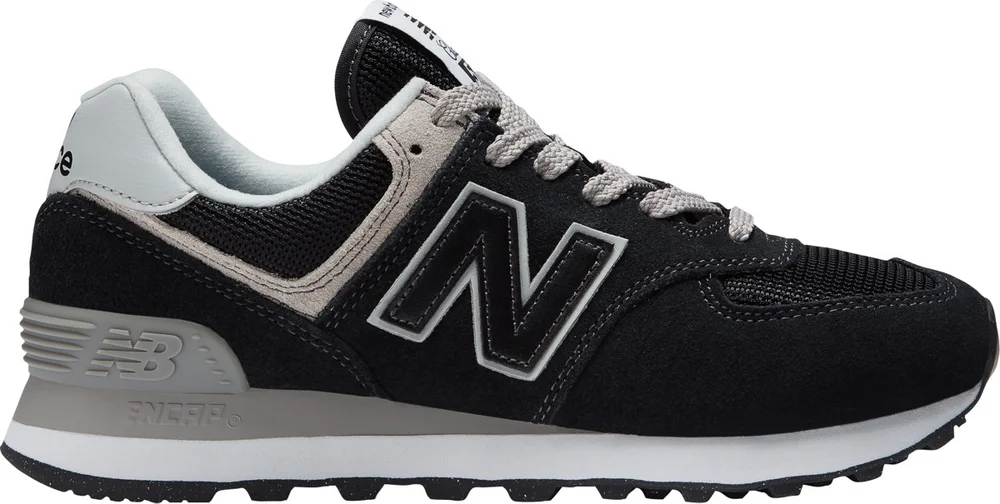
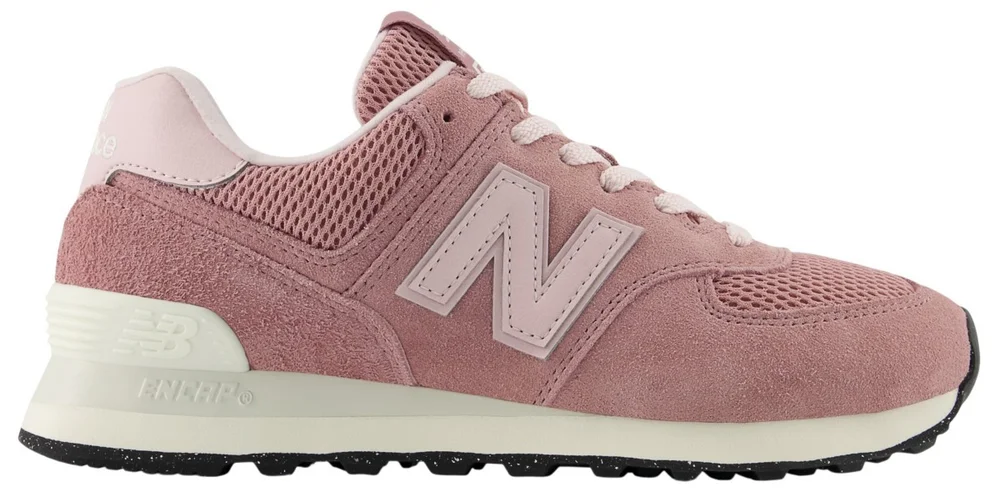
Black/Grey is the darker women's option in size 10; Alpha Pink/White brings a lighter note in women's 8.5, and Nimbus Cloud stays tonal in women's 11. The unisex Oxford Blue/Apricot Orange comes in M8.0/W9.5. The paired figures describe one size, not two sizes to compare. I would use the displayed women's number when switching into a unisex 574.
The practical rule: for a women's 574, start with your usual women's size and adjust for toe room or width; for the Core, heed the brand's small-fit note; for a unisex pair, follow its displayed women's equivalent. Anyone between size labels or looking for extra width should check the chart twice. My first try would be the women's line in my regular size, then a unisex colorway only by its printed W equivalent. I would rather test length and width than default to a whole size up.