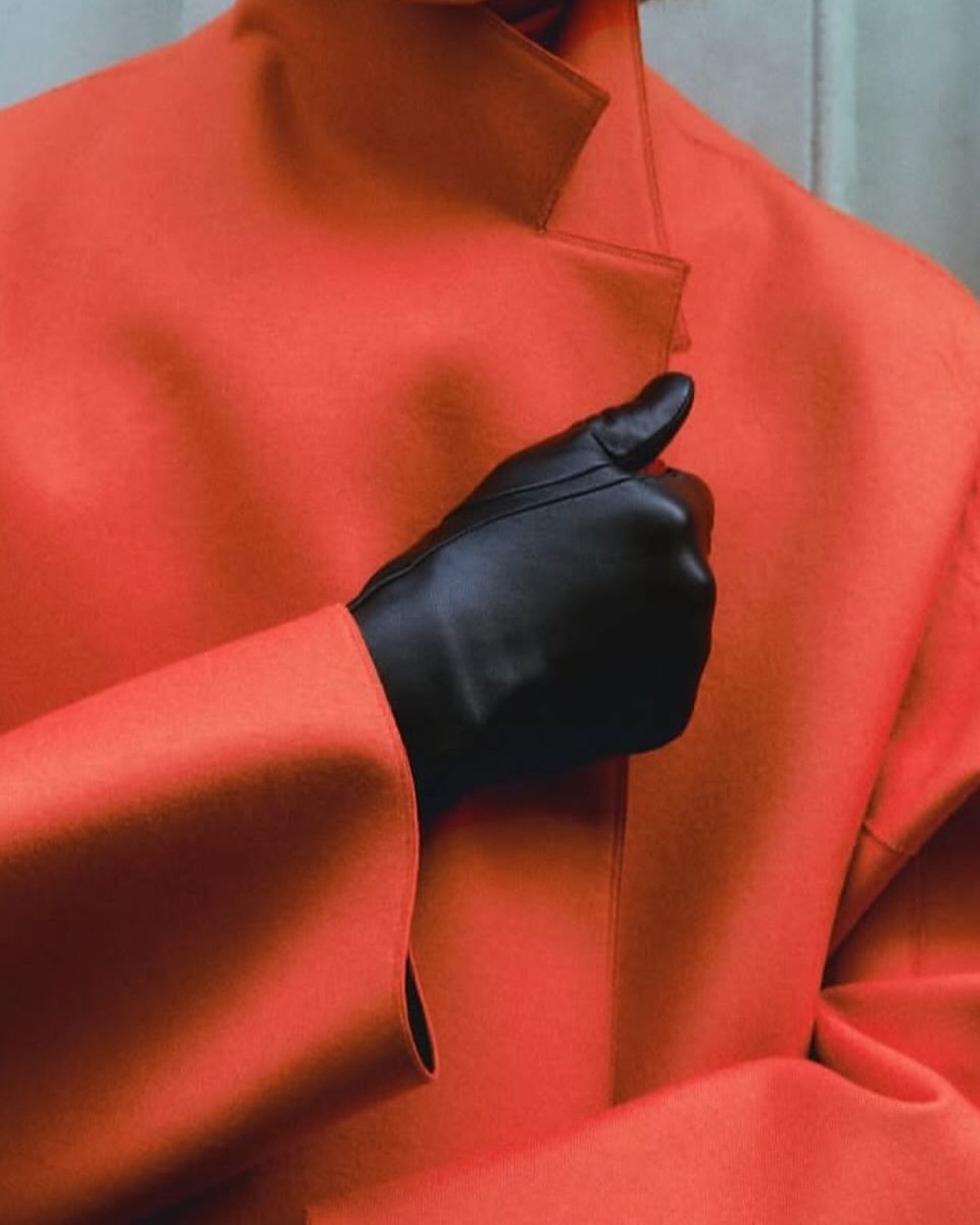
Uma Wang brings printed coats, fluid dresses, and textural separates into one edit. I would build the look around one patterned layer and let the rest breathe.
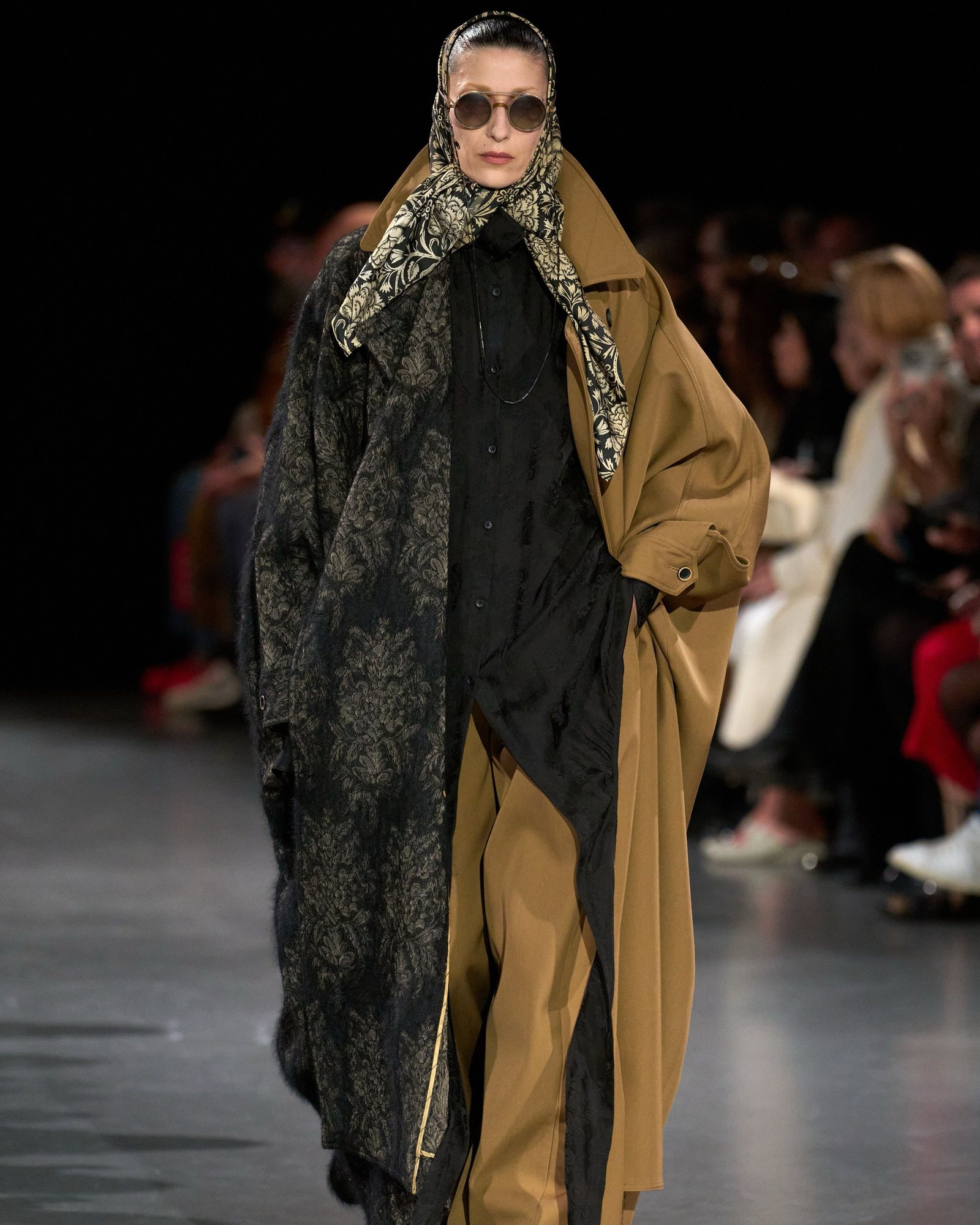
Uma Wang: A Coat, a Hem, and Room for Texture
A coat with a second life
In 2017, Uma Wang moved her seasonal debuts from Milan to Paris Fashion Week. There is a pleasing little drama in that shift: the address changes, but the clothes still do the talking. It frames coats that treat their surface as part of the silhouette, not decoration added at the end.
Wang, whose Chinese name is Wang Zhi, studied textiles at Dong Hua University in Shanghai before fashion design at Central Saint Martins in London. She has said clothes should be worn more than once and described a zero-waste policy that turns old material into something new. I take that as a point of view, not a promise about any individual piece here: look closely at the cloth and choose something you want to keep wearing.
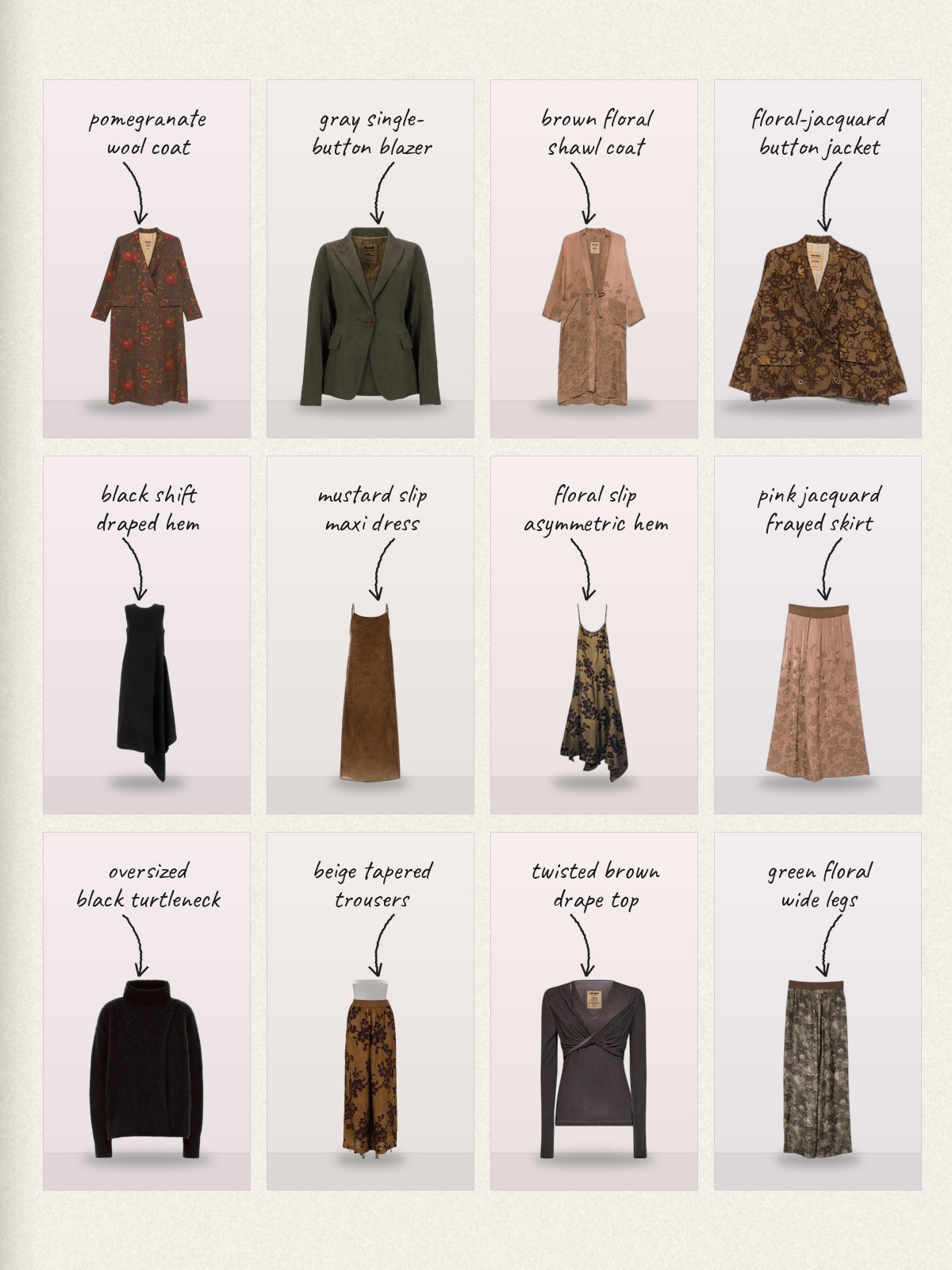
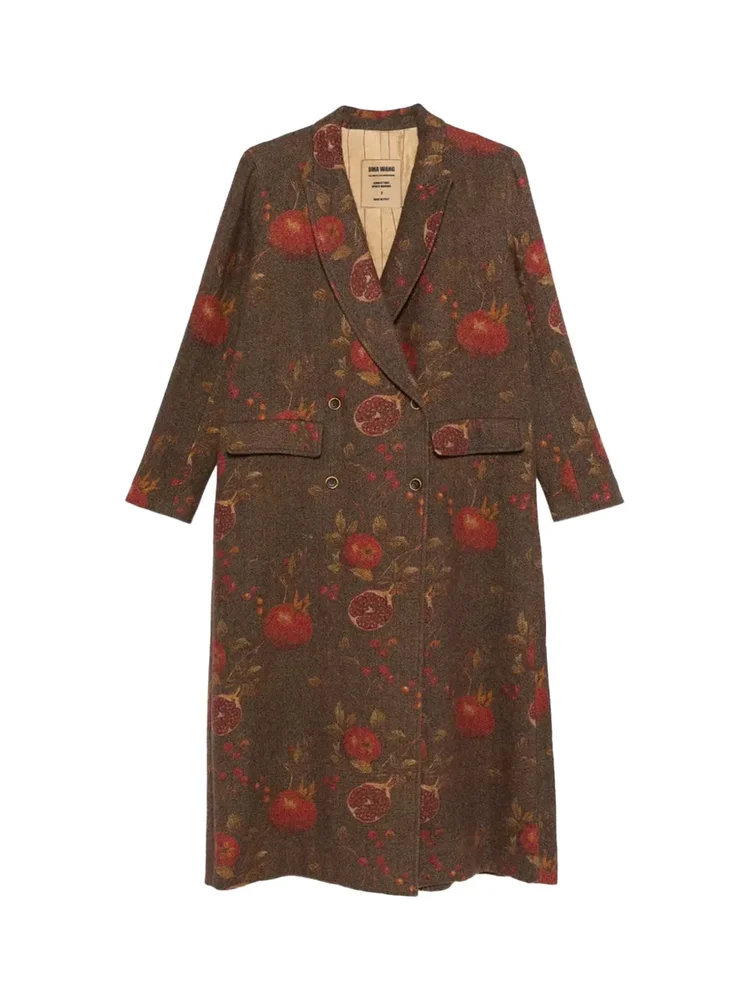
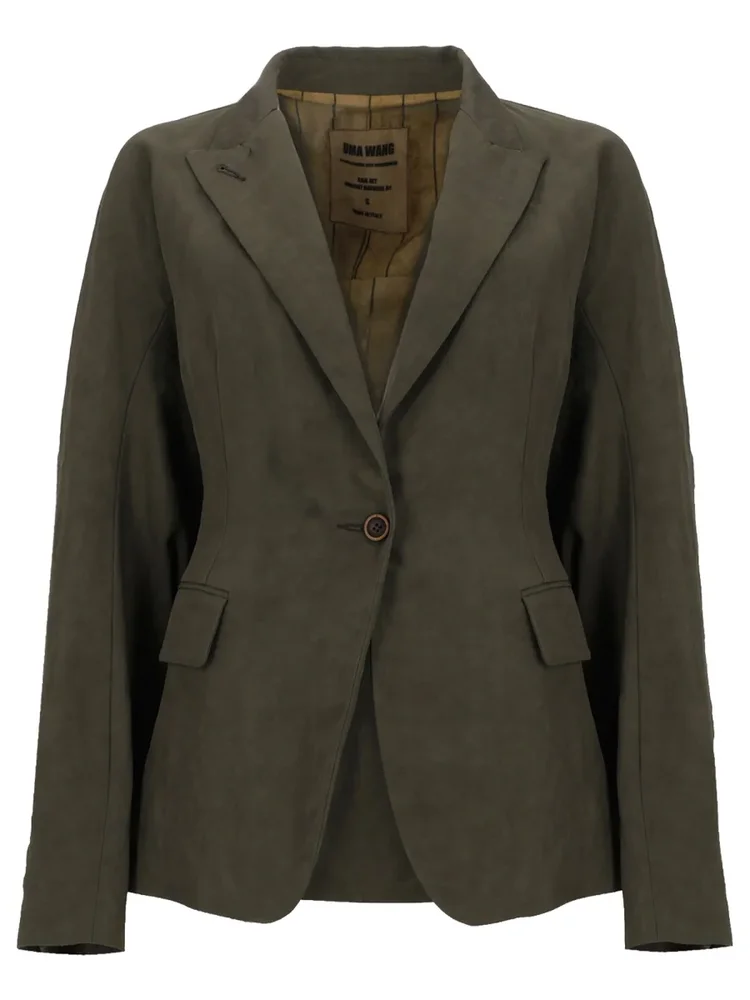
The Pomegranate-Print Wool Blend Coat pairs a warm tan-green print with a double-breasted shape, notched collar and welt pockets. Its wool, linen and polyamide blend gives me reason to keep the rest spare: dark denim, a plain knit, shoes with a clean line. The gray Kaia Blazer is the calmer counterpoint, fitted and single-buttoned in a viscose-linen blend; I would wear it over a soft tee and leave the patch pockets in view.
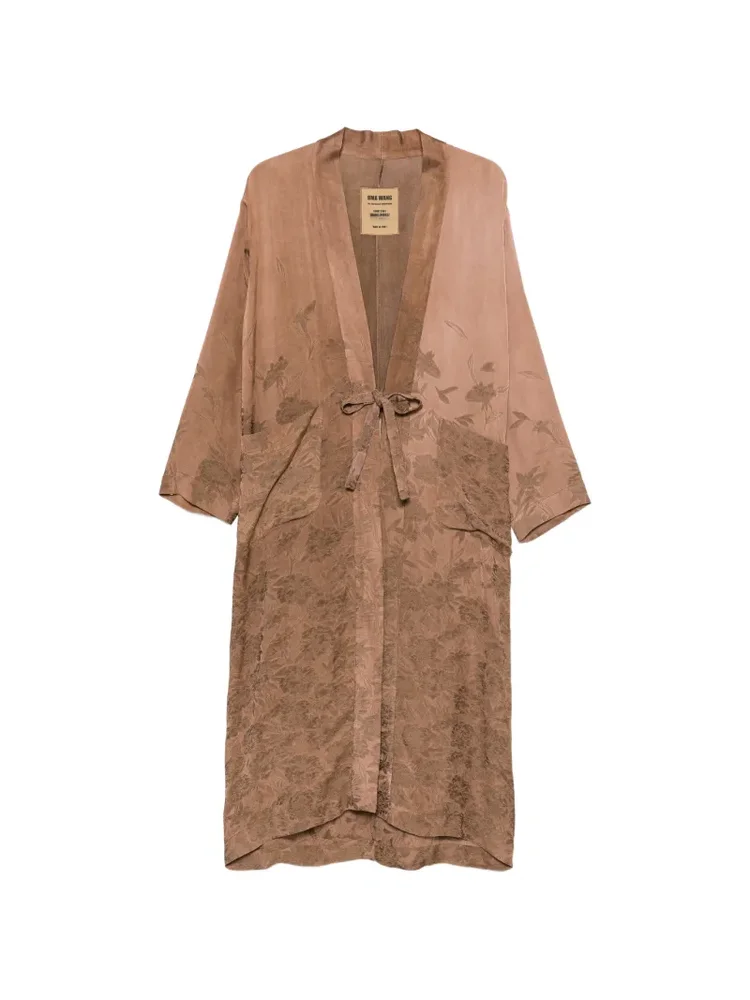
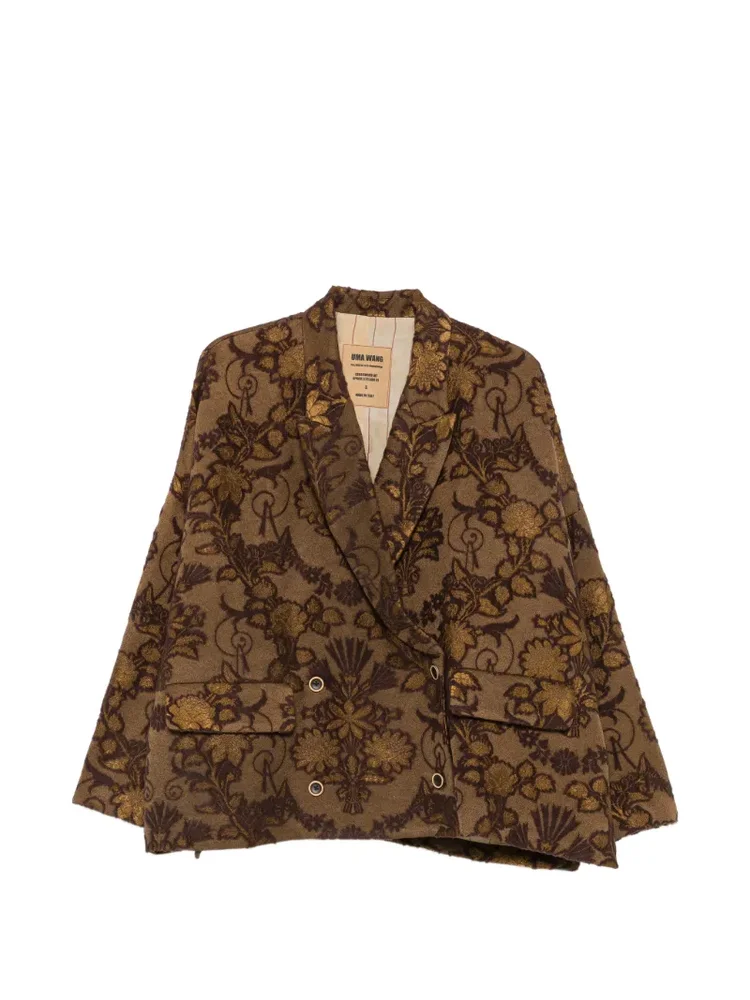
Then there is the brown Corry Coat, in floral jacquard with shawl lapels and a self-tie. The brown Floral-Jacquard Double-Breasted Jacket has a sharper collar and side flap pockets. I would skip another busy print if a patterned scarf is already planned for dinner. Before choosing either coat, hold it against your plainest layer and see if the pattern still feels like you.
Dresses with a little movement
An uneven hem is easiest to judge in motion, not from a hanger. For Uma Wang dresses, I would check that the asymmetric edge clears the shoe and does not catch when I sit; that little test matters more than whether the color seems easy in a still moment.
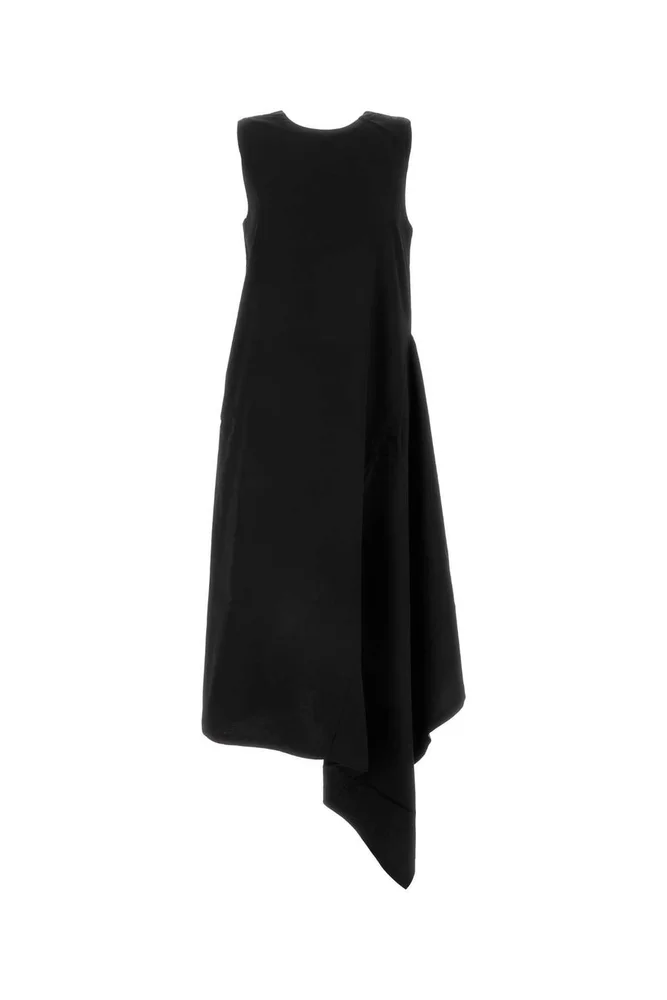
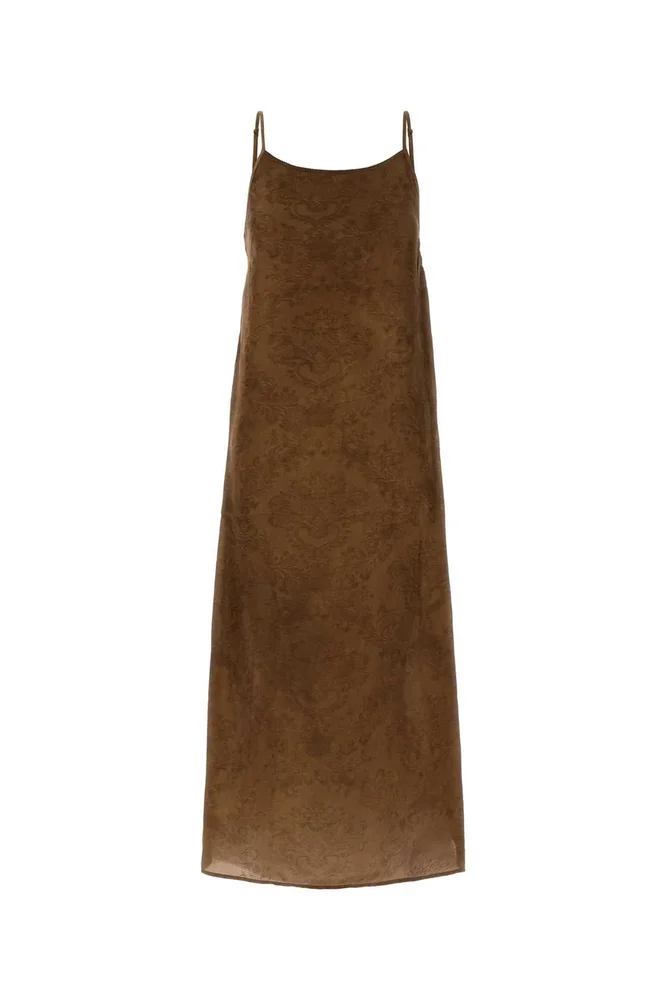
The black Ardal Dress is a sleeveless shift with relaxed asymmetric lines and an irregular draped hem, cut in a viscose-cotton blend. I would keep the styling spare, maybe a close-fitting long sleeve under it when the weather turns, or a coat over it and a narrow boot. The mustard Anaya Dress goes in a more fluid direction: narrow straps, rounded neckline and a maxi hem in viscose and cupro. I picture it with a substantial cardigan and a flat shoe so the long line does not become a special-occasion-only proposition.
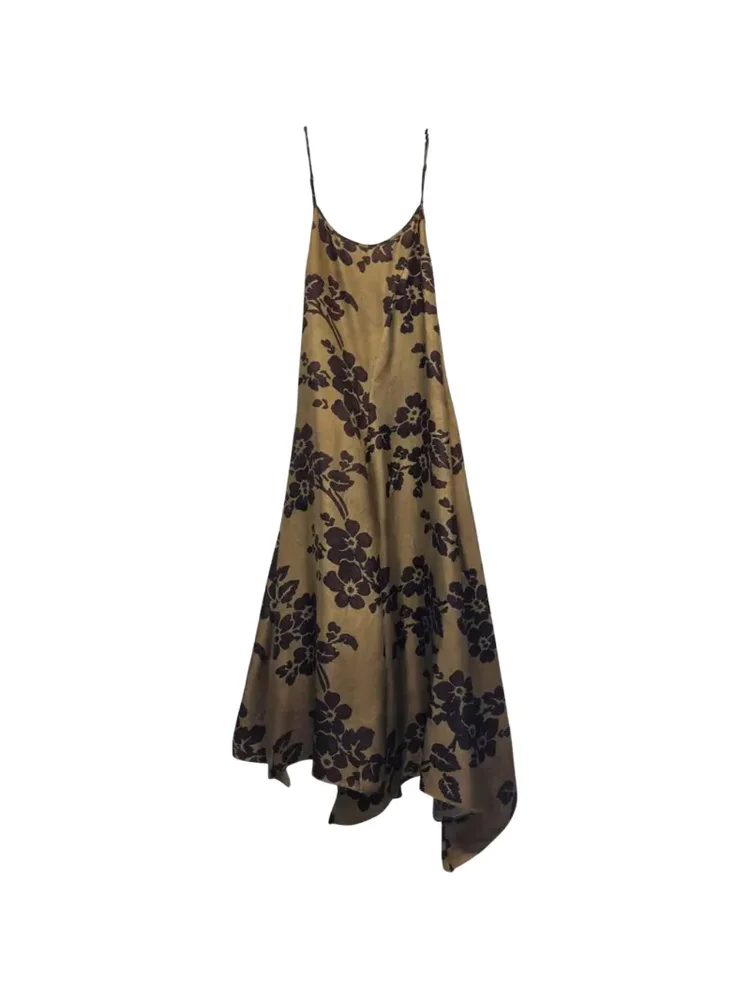
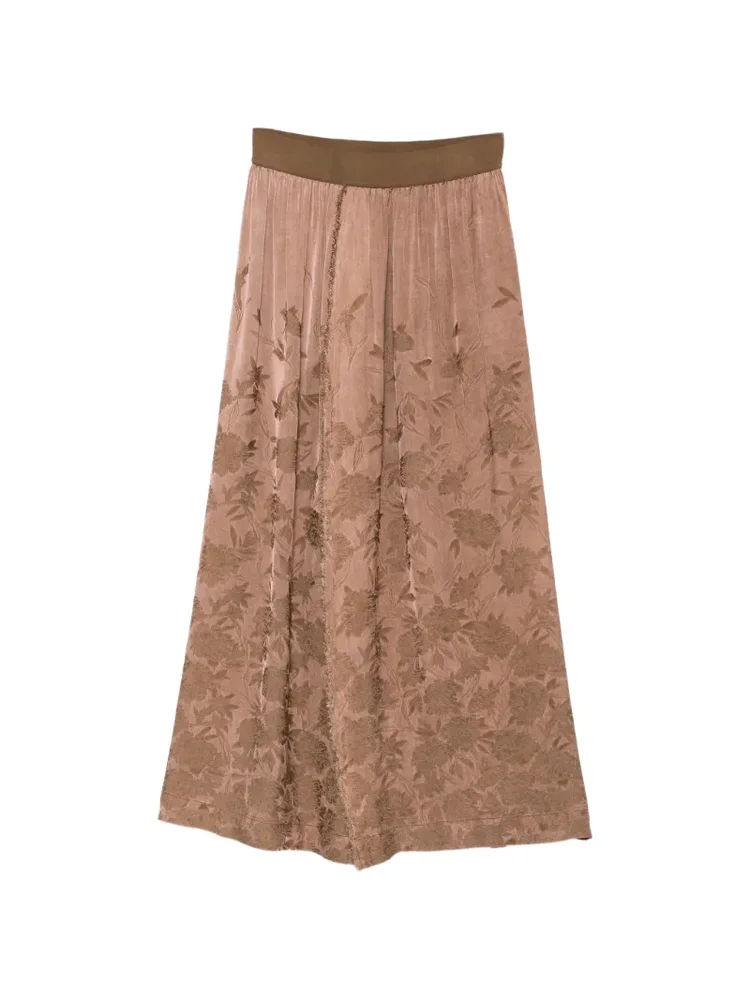
The beige-brown Floral-Print Asymmetric-Hem Dress has adjustable spaghetti straps and a flowing A-line edge; I would use the adjusters to fine-tune where it lands before choosing a heel. The pink Floral-Jacquard Frayed Maxi Skirt has pleats, frayed edges and an elasticated waist, so I would balance its surface with a plain dark top. For a cold-weather dinner, I would wear that skirt with a close-knit and boots, then check the hem against the boot shaft while walking. These pieces do enough on their own; one clean layer is usually all I would add.
Soft knits, easy trousers
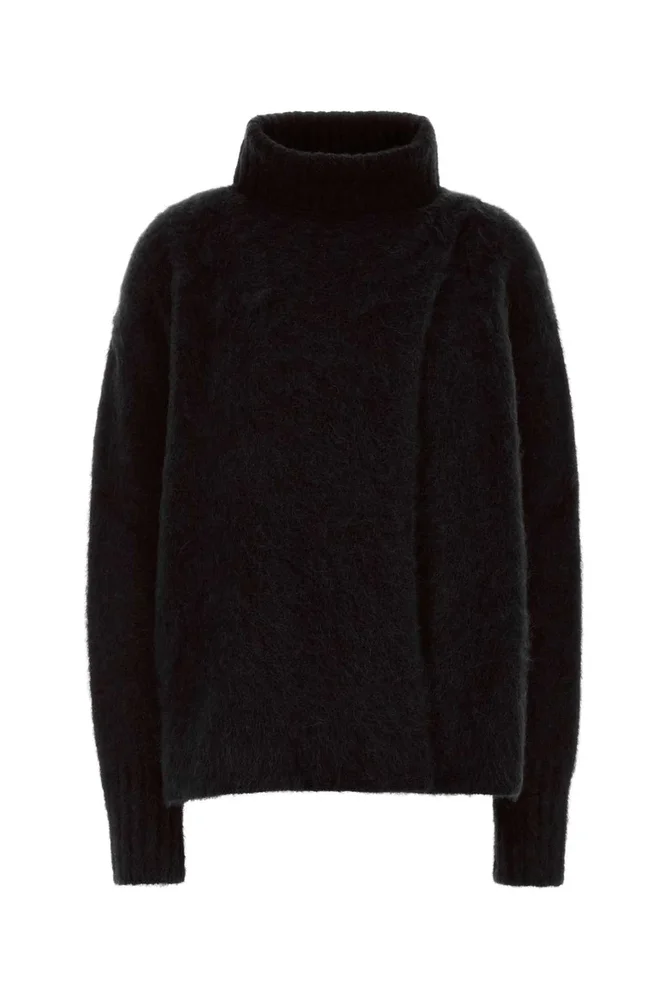
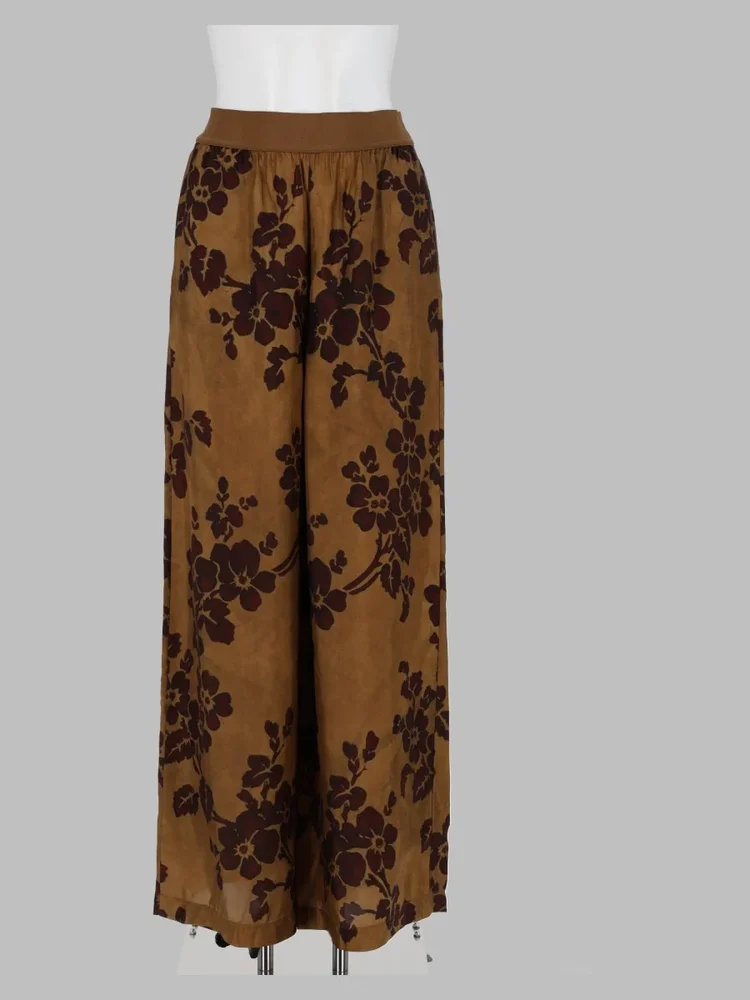
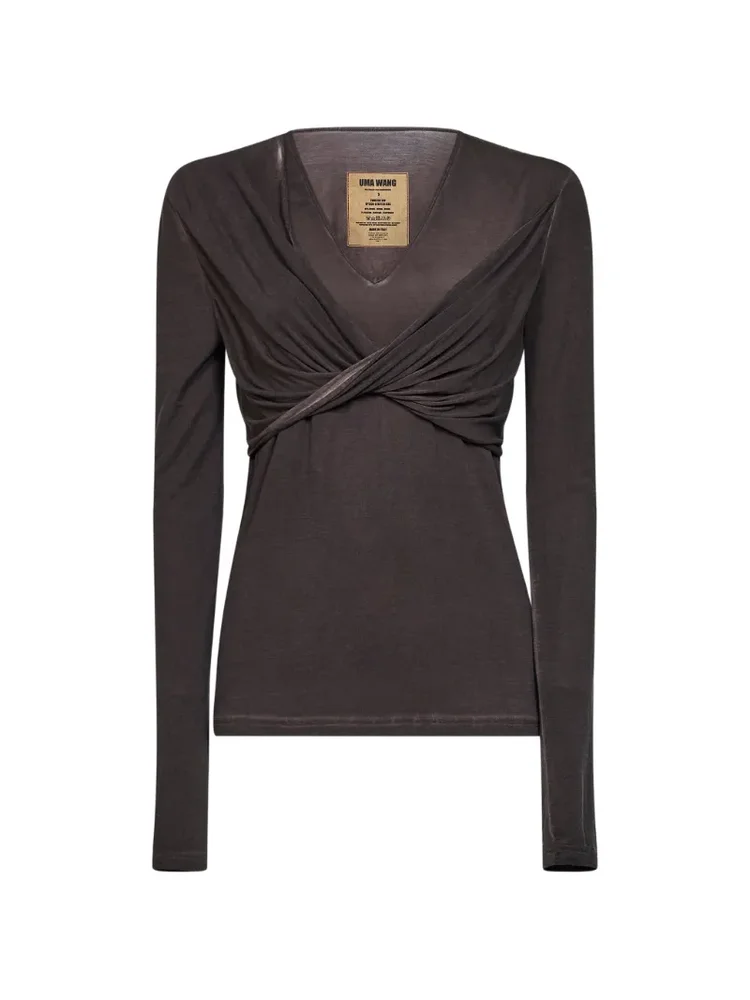
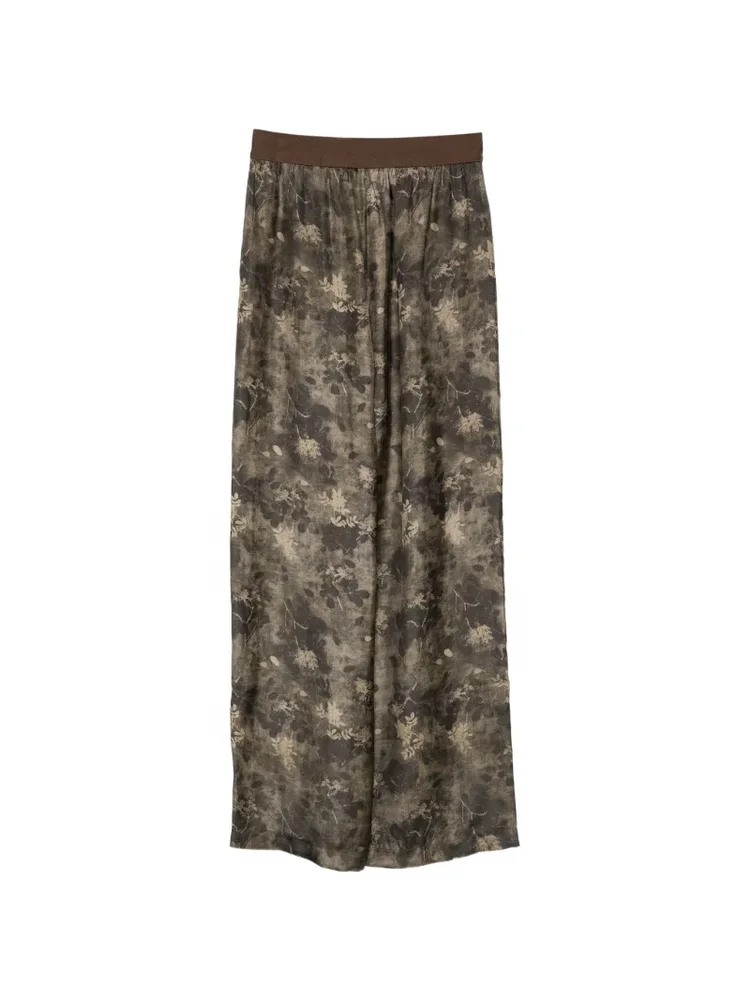
With Uma Wang knits, keep the proportions relaxed, not shapeless. The black Highneck Sweater has an oversized ribbed collar, dropped shoulders and an alpaca blend; the beige Pansy Trousers fall in a relaxed viscose-cupro line with a subtle taper. Let the sweater skim the waistband rather than swallow it.
Give the print some room
In the end, choose one surface that makes the outfit feel personal, then leave enough quiet around it for the cut to register. The appeal of Uma Wang here is the interplay of print, texture and drape, not any demand to dress loudly.
The 2017 shift from Milan to Paris Fashion Week makes a fitting callback: a change of setting can be enough to make you look again. Take it as permission to trust the piece with the most character, keep the rest uncomplicated and head out before adding things just because the calendar says party season.