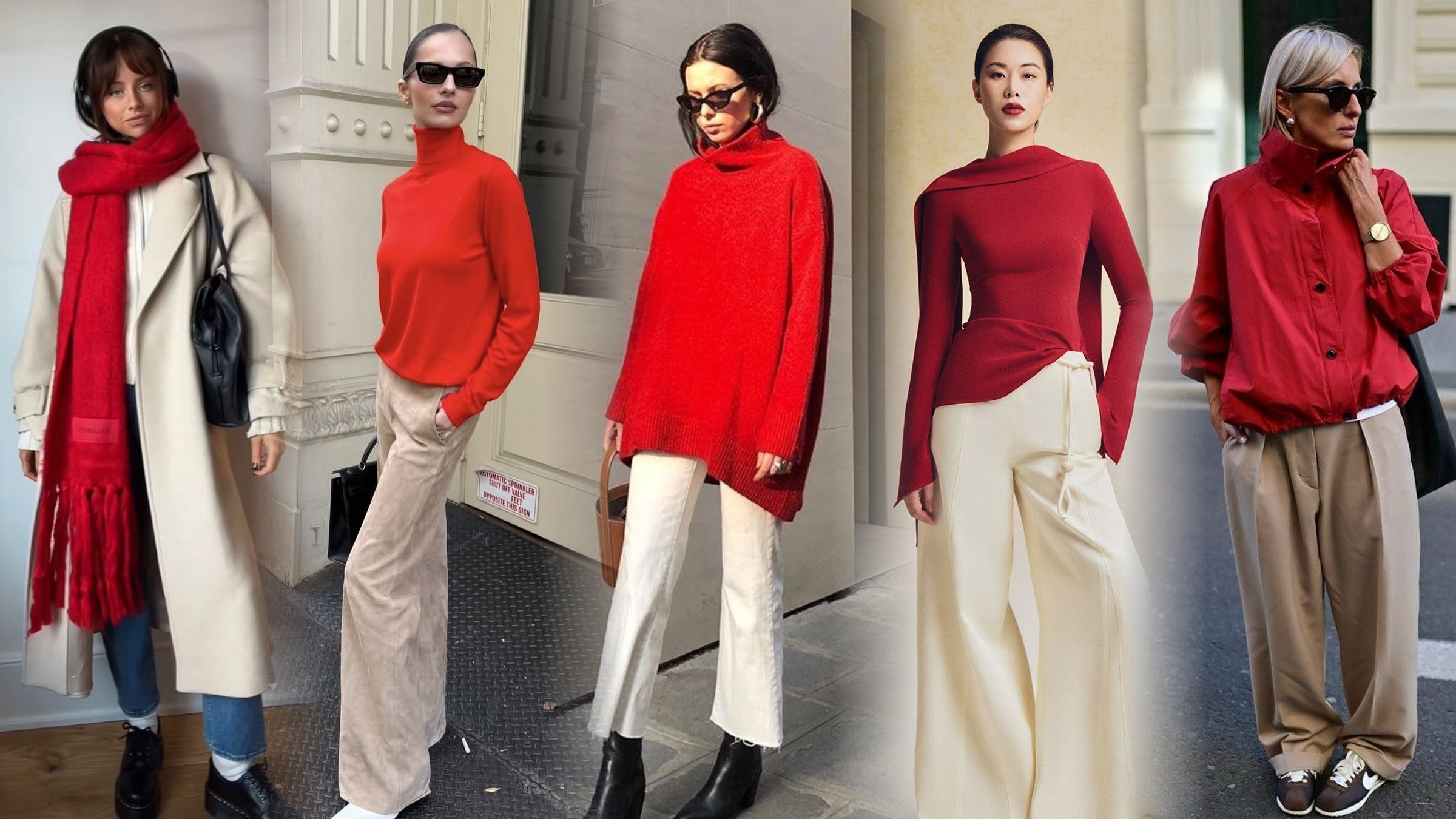
Valentino is privately held, with Mayhoola owning 70% and Kering 30%; any control change is postponed until 2028 at the earliest.
Who Owns Valentino? Mayhoola Leads, Kering Holds 30%
The Ownership Today
Valentino is privately held: Qatari investment firm Mayhoola owns 70 percent and Kering holds 30 percent, and Mayhoola's control began in 2012. So, who owns Valentino today? Both investors do, but Mayhoola is the majority owner; Kering is the minority partner, not the parent that has absorbed the label. The Valentino parent company question is a little misleading: there are two shareholders rather than one luxury conglomerate in sole control. In September 2025 the companies said the ownership structure would not change before 2028 at the earliest, pushing the possible transfer of Mayhoola's remaining stake to options in 2028 and 2029. Those options are future possibilities, not a completed takeover.
Who makes Valentino? The fashion house behind the name is Maison Valentino, formally founded in Rome in 1960 by Valentino Garavani and Giancarlo Giammetti. Garavani opened his first atelier in Rome in 1959 after studying in Paris, then introduced his first couture collection, Ibis. I like that it began as a designer-and-business-partner collaboration: one person made the clothes, the other helped shape the company. The current shareholder story is a later chapter, not the origin story.
The Designer and the First Shoes
Who founded Valentino? Valentino Garavani and Giancarlo Giammetti formally established the house in 1960, after Garavani opened an atelier on Rome's Via Condotti the year before and debuted Ibis. The early ambition was couture, not a line of studded accessories, which is a useful filter when shopping: Rockstud is the familiar shorthand, but Valentino's first language was dressmaking and a sharp eye for ornament.
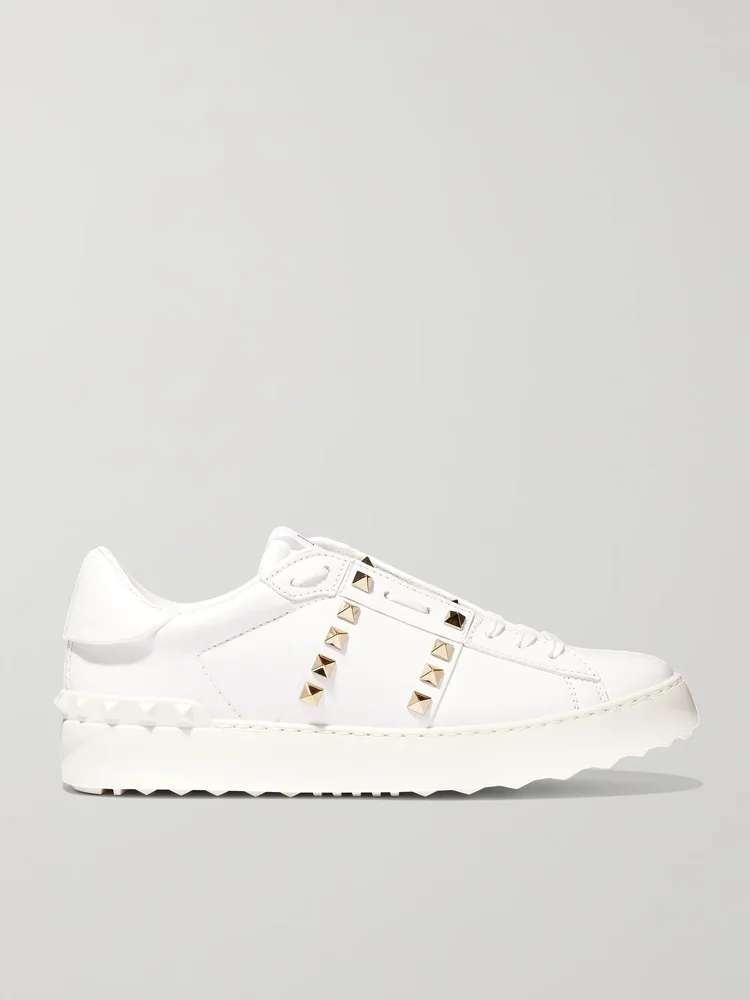
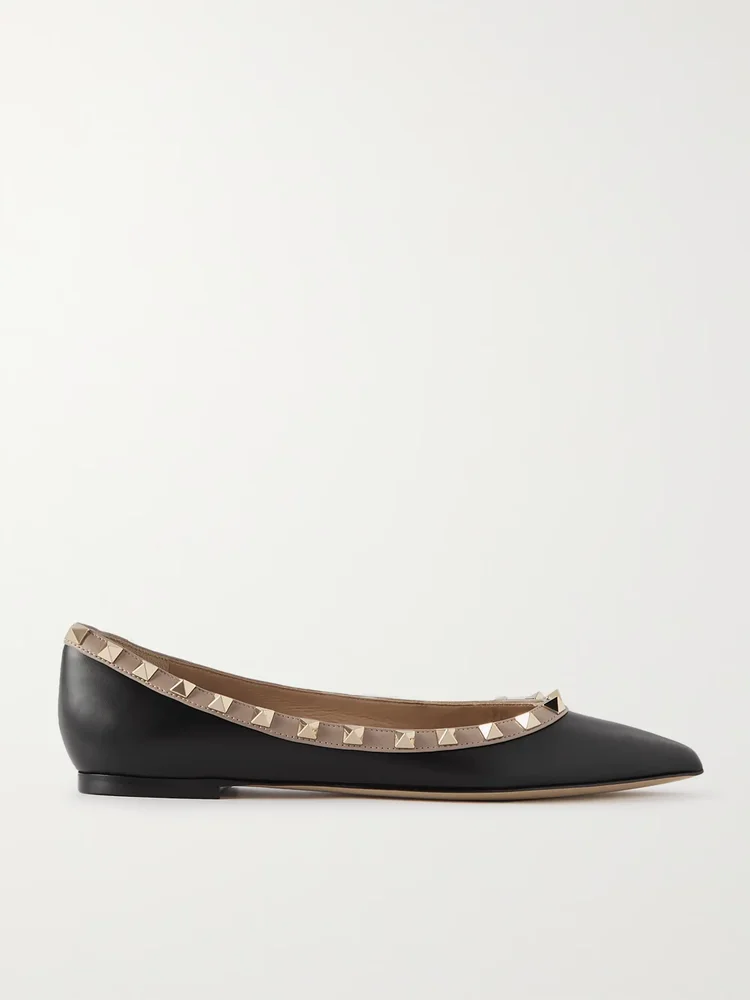
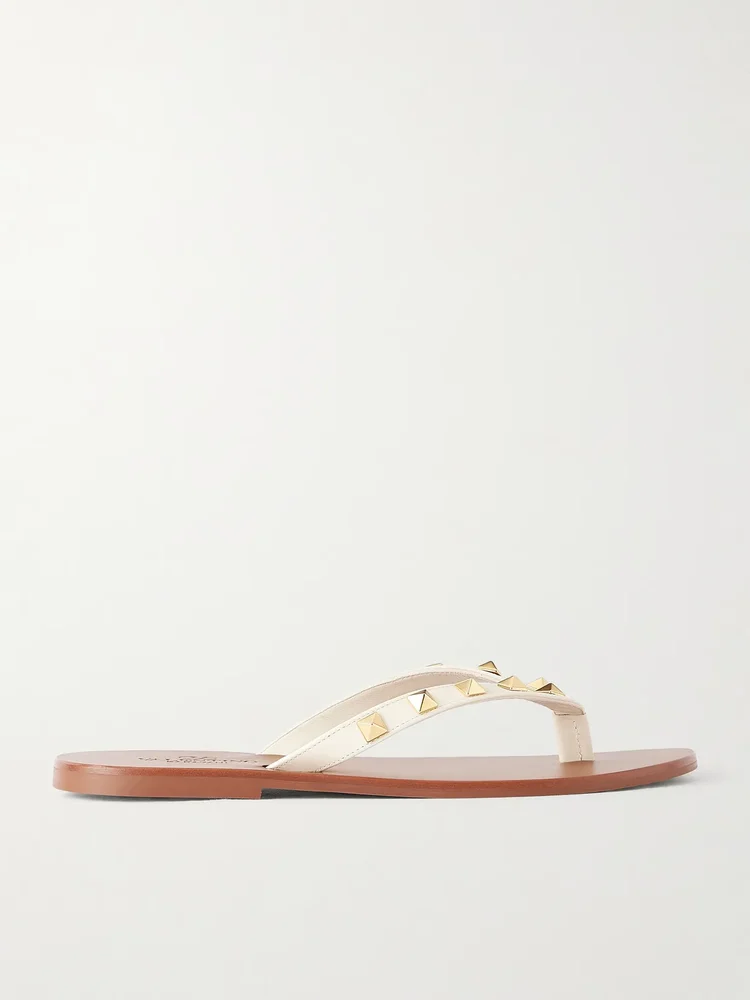
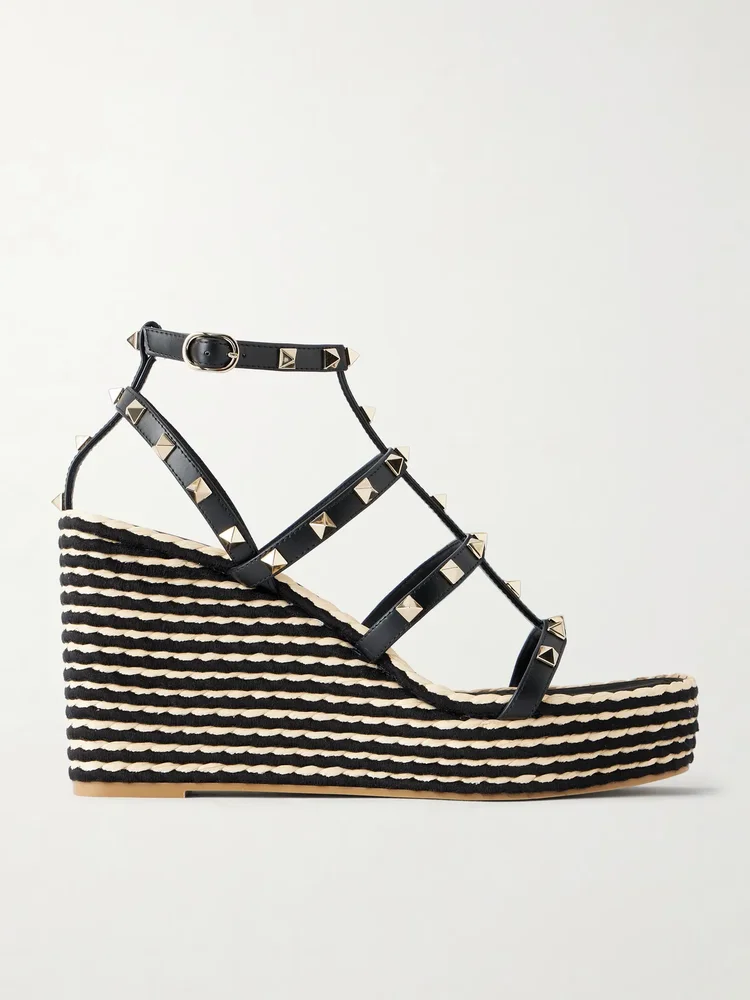
My first try would be the Rockstud Untitled leather sneakers, white leather with pyramid studs for a casual pair that still carries the house's embellishment. Rockstud leather point-toe flats put the studs on black leather with contrasting trim; the ivory Rockstud leather thong sandals keep the look flatter and spare. For a little height, black Rockstud embellished leather wedge espadrilles are more summer shoe than evening heel. I would start with the flats if I wanted the detail without building an outfit around the shoes; the sneakers feel easiest for regular wear.
A Succession of Shareholders
Ownership has changed hands in steps, not one big slide into Kering. Valentino was sold by its founders to Italian holding company HdP in 1998; Marzotto acquired it in 2002; private-equity firm Permira took control in 2007; and Mayhoola bought it in 2012. In 2023 Kering agreed to acquire 30 percent for a cash consideration of €1.7 billion, with Mayhoola retaining 70 percent; the 2025 amendment then postponed any possible next transfer. The shareholder table changed, but the present split did not. Mayhoola also owns Balmain, Pal Zileri and Turkish department-store chain Beymen. I would not treat an option as a done deal or assume it changed what makes a Valentino piece worth buying.
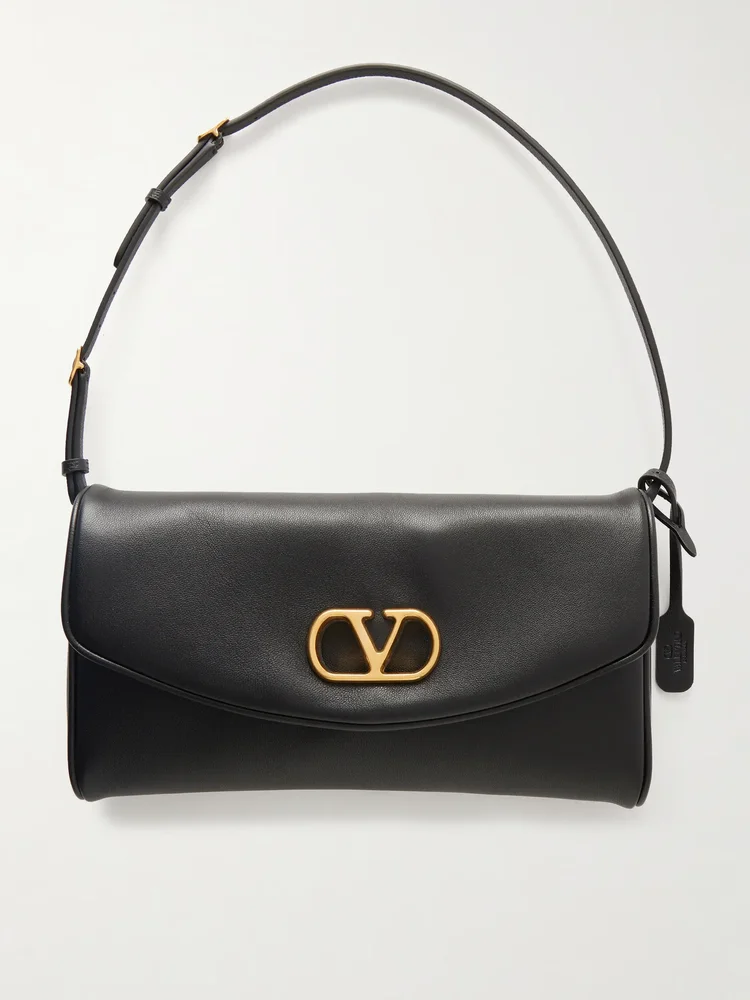
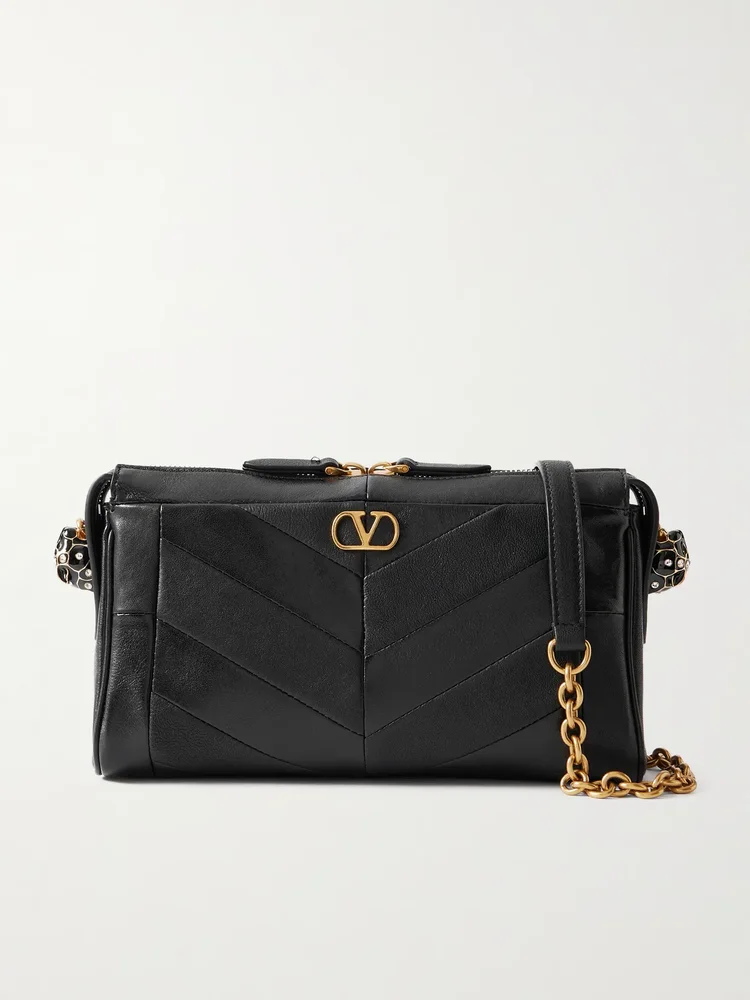
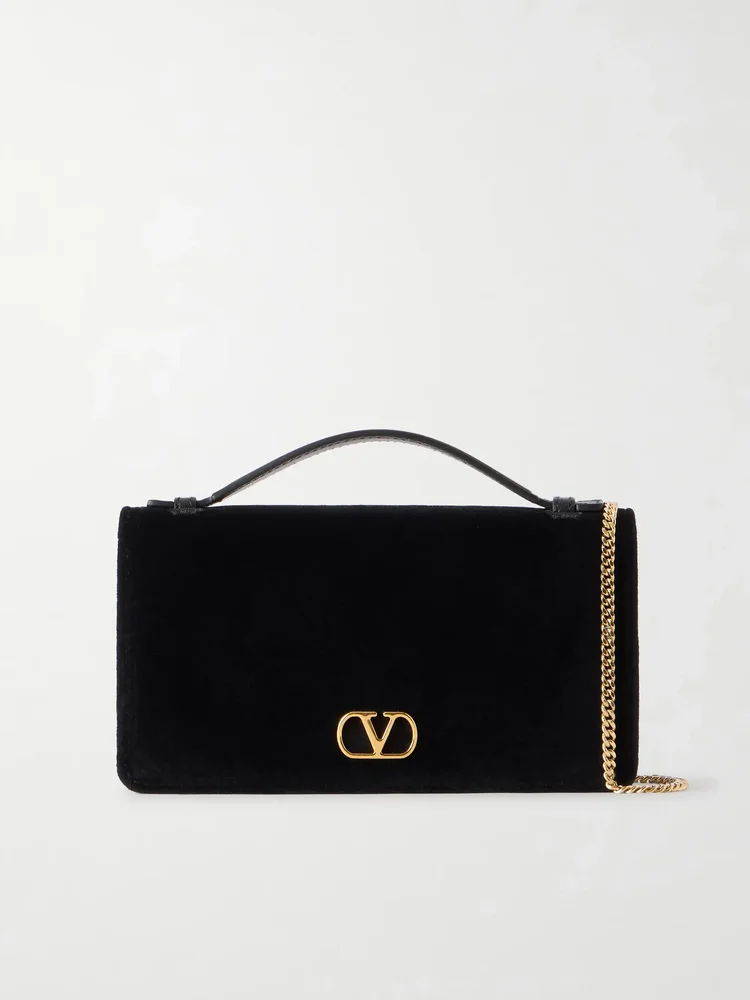
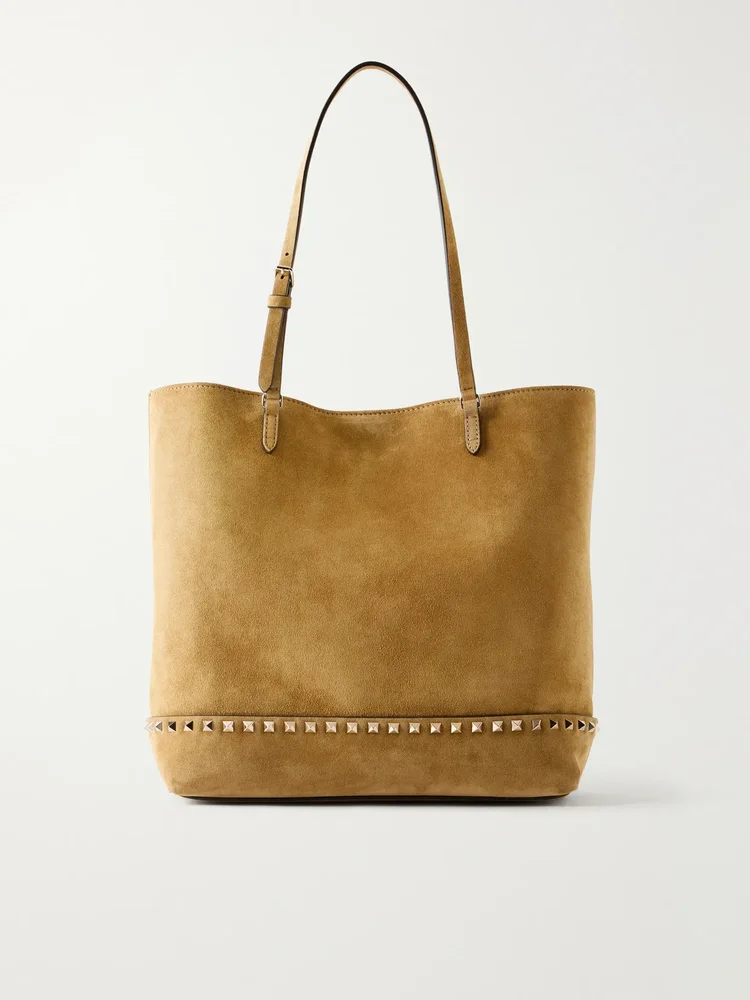
The DeVain leather shoulder bag is the quiet everyday option, in smooth black leather with a VLogo flap. Panthea paneled leather shoulder bag has a chevron front and crystal panther heads, so it is the more decorative choice. The Logo-appliqué velvet top-handle bag is plush black velvet with a chain strap; the Rockstud medium suede tote has room for daily essentials and studs along its base. If I buy one bag first, I would choose the tote for capacity; the others are more logo-led or occasion minded.
What I Would Buy First
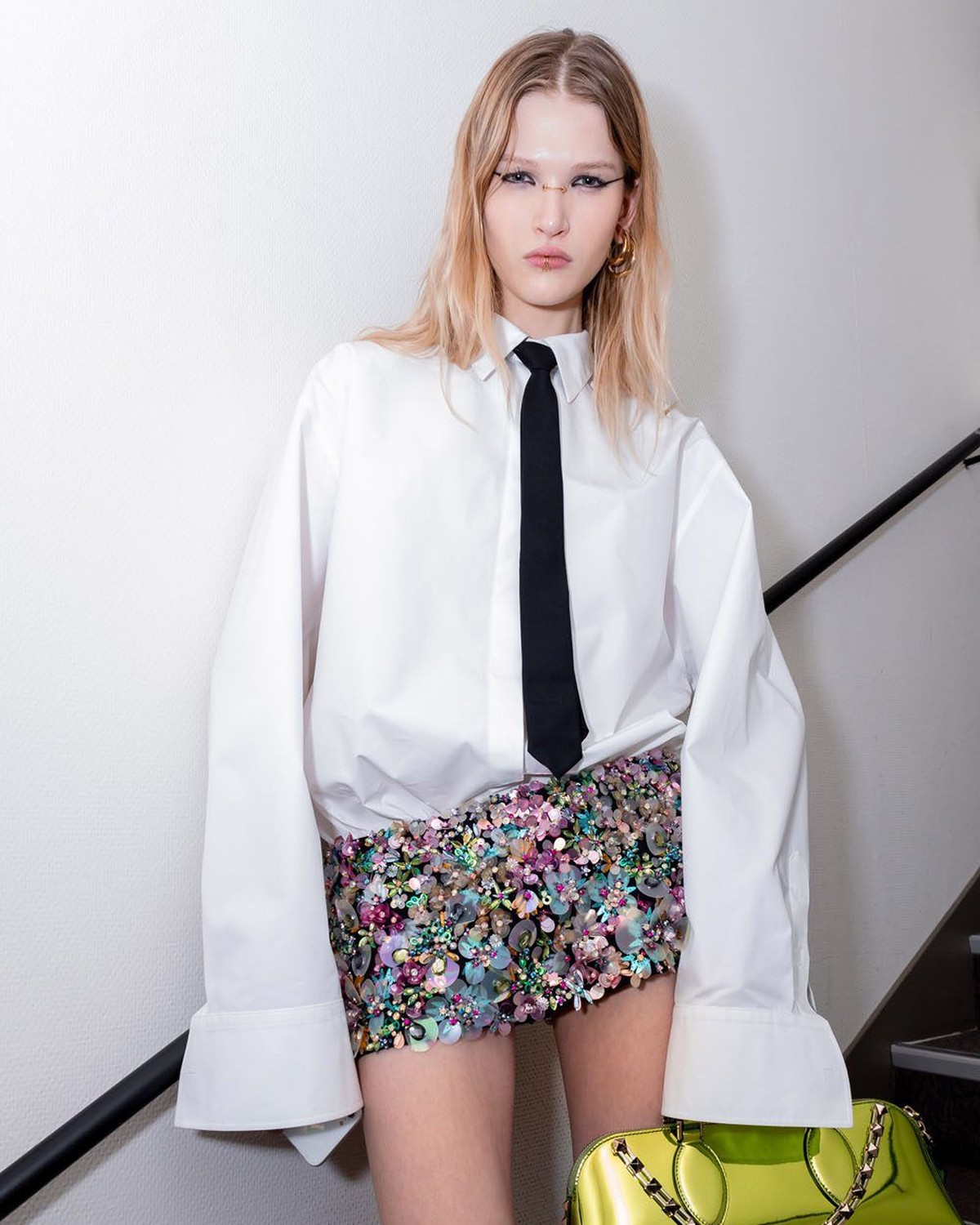
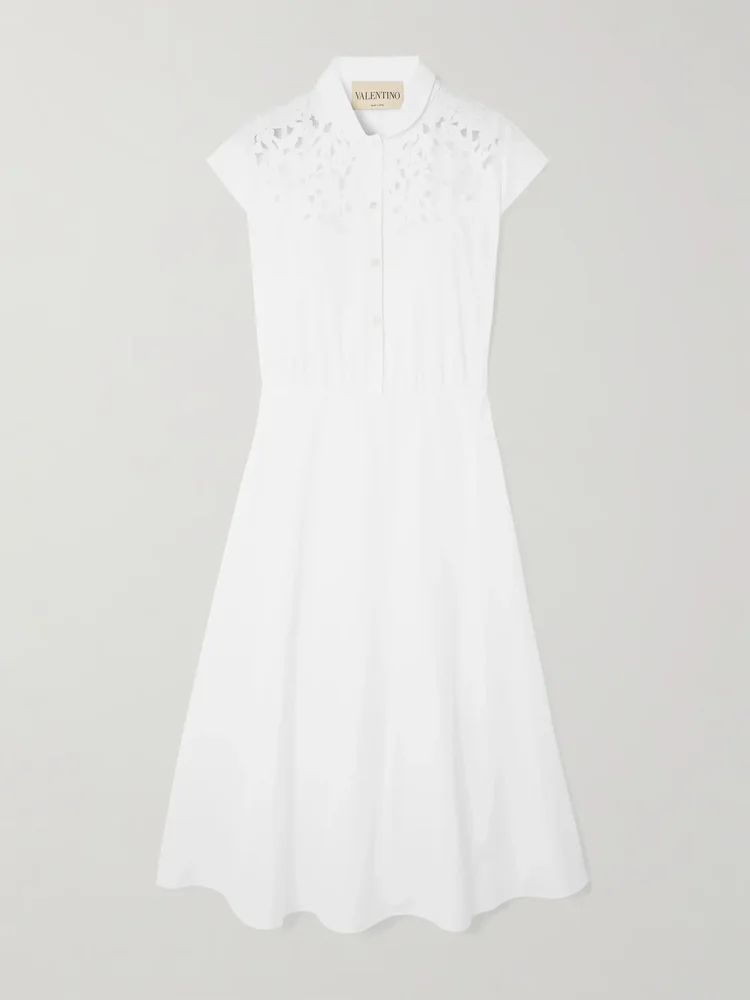
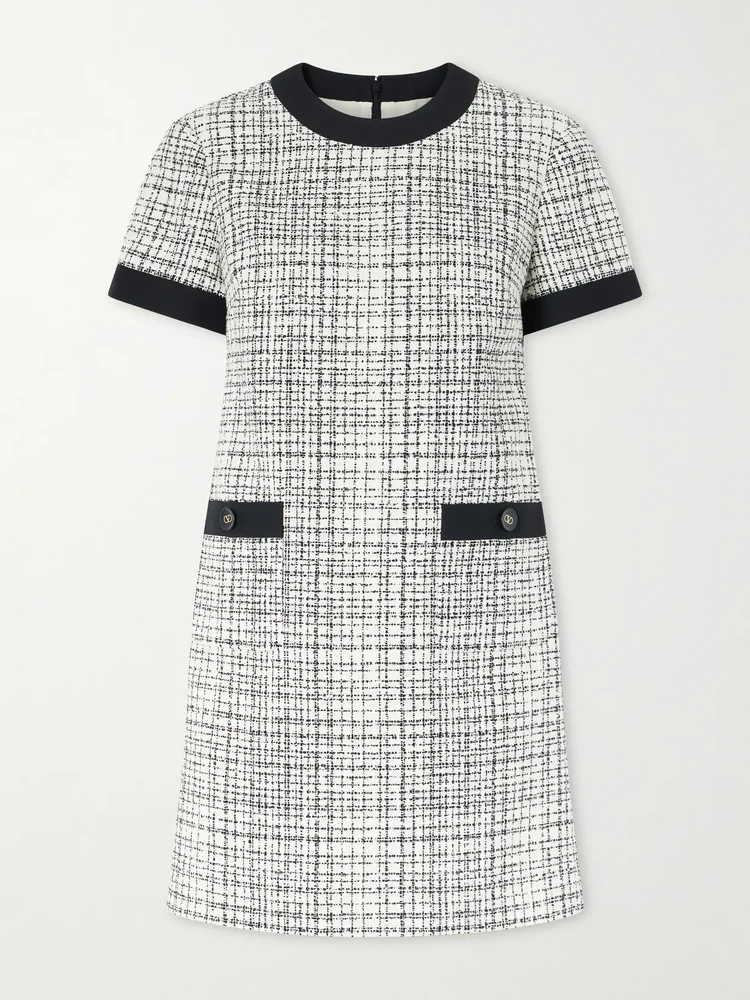
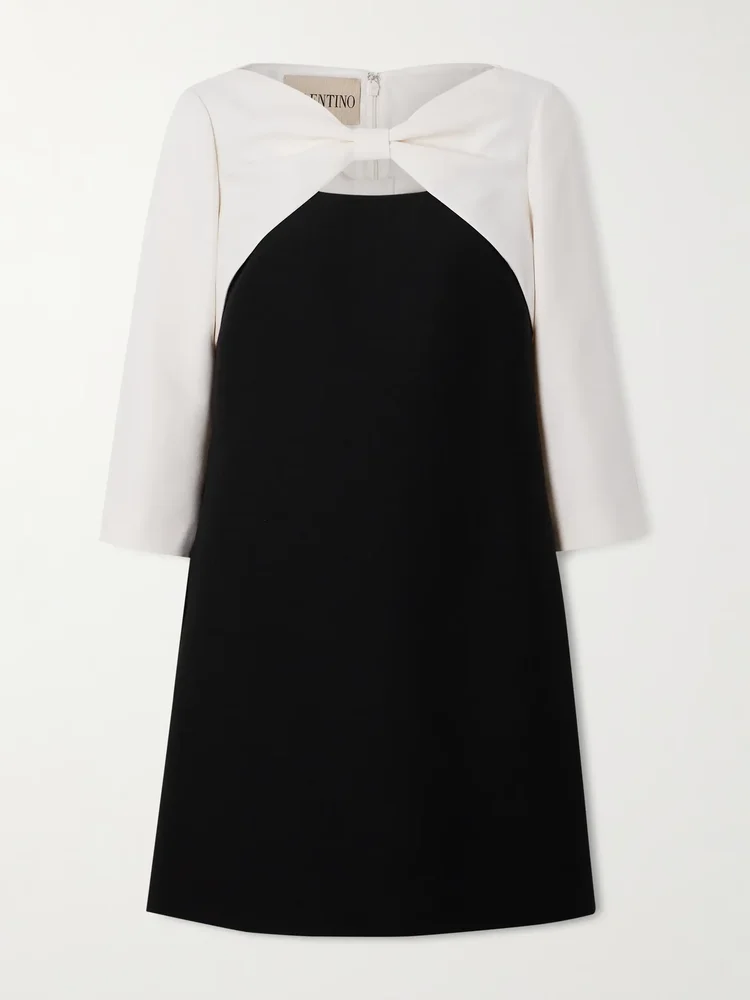
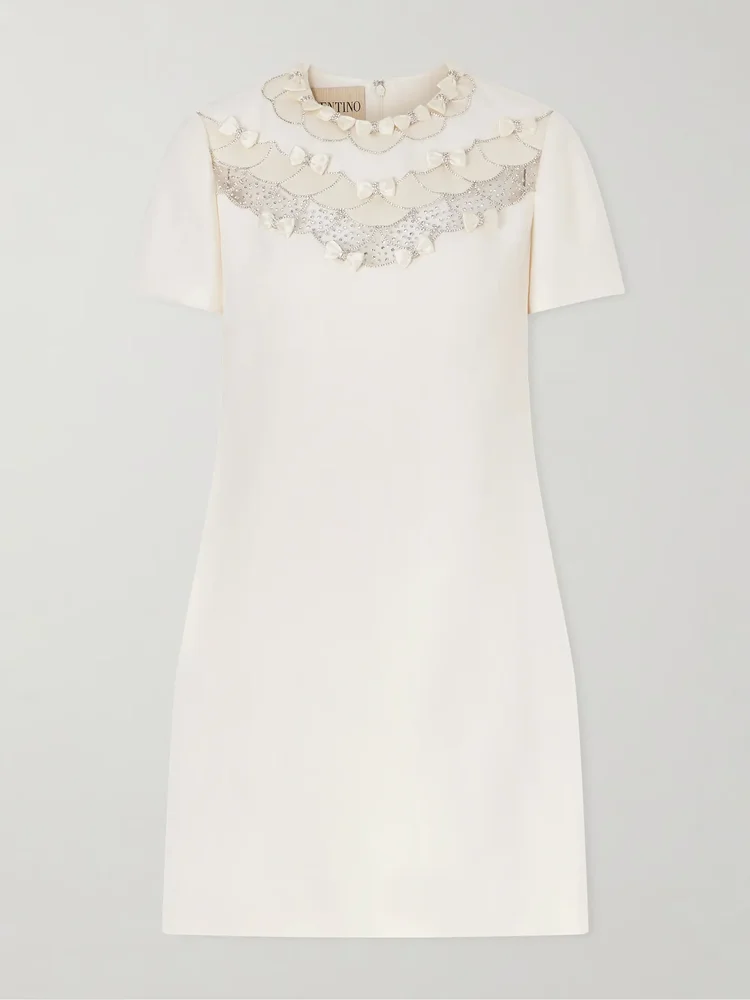
I would buy into Valentino through something I would wear, then let the couture-adjacent pieces wait. The Broderie anglaise-trimmed cotton-poplin midi dress is white cotton with an embroidered yoke, a good pick for warm events; the Checked cotton-blend tweed mini dress has contrast hems and pockets with logo buttons. The Bow-detailed cutout wool and silk-blend crepe mini dress has a neckline bow and a small chest cutout, while the Crystal-embellished mesh-trimmed crepe midi dress puts a crystal mesh panel and satin bows at the neck. I would start with the checked tweed mini if I wanted a repeatable day dress; the ivory crystal-trimmed one is a special-occasion buy.
What I would skip is buying the loudest logo simply because the name on the label is expensive. The house's strength is that it can make ornament feel considered, and if a piece needs a big event to get worn, I would pass unless that event is already on the calendar. For the least risky first purchase, I would pick the checked mini or the Rockstud flats; for a collector's mood, the crystal-trimmed dress suits a collector. I would buy Valentino for its design vocabulary, not only its shareholder names.